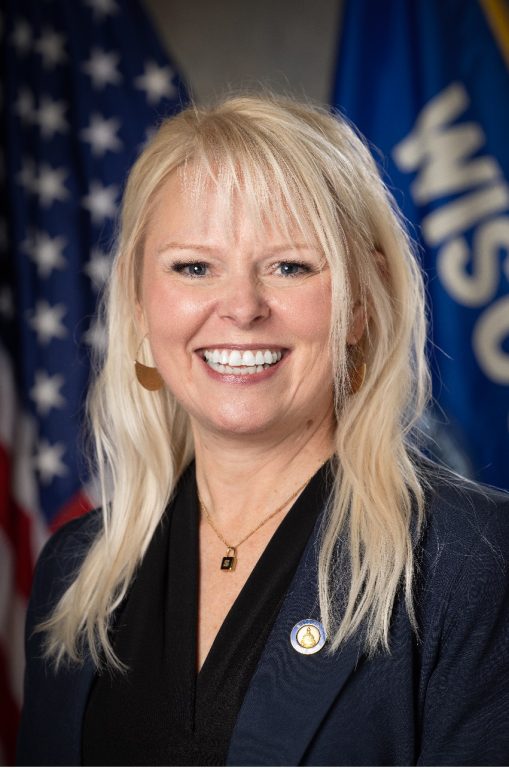
Wisconsin State Senator Sarah Keyeski (D-Lodi) has been officially appointed to a crucial role on the Joint Legislative Council Study Committee on the Use of Artificial Intelligence. This significant bipartisan body is tasked with undertaking a thorough and critical examination of the burgeoning applications of artificial intelligence specifically within the health care sector across the state. The appointment signals a proactive legislative endeavor to not only understand but also potentially shape the regulatory framework surrounding the rapidly evolving landscape of AI implementation in medical practices and related administrative processes. The committee's mandate is broad, yet focused, encompassing a comprehensive study of how AI is currently being utilized, and will foreseeably impact, various critical interactions within the health care system. This includes detailed analysis of AI's role in direct engagements between patients and their health care providers, the complex relationships between patients and their insurance companies or state-sponsored Medicaid programs, and the operational dynamics between health care providers and these same insurers or government programs. This initiative is designed to address both the emerging challenges, such as ethical considerations and data privacy, and the vast opportunities, like enhanced diagnostic capabilities and personalized treatment plans, presented by AI integration in health care, ultimately aiming to ensure that technological advancements are deployed responsibly, ethically, and efficiently, while aligning with paramount goals of patient well-being, data security, and equitable service delivery for all Wisconsin residents.
Committee Formation, Membership, and Senator Keyeski's Stance on AI in Health Care
The official notice of Senator Sarah Keyeski's (D-Lodi) appointment to the Joint Legislative Council Study Committee on the Use of Artificial Intelligence underscores a growing legislative recognition of AI's transformative potential and inherent complexities, particularly within the sensitive domain of health care. This committee's establishment is a direct response to the increasing integration of AI technologies and their profound implications for medical practices and patient care. The committee's primary charge involves a meticulous investigation into how AI currently operates and is projected to influence various facets of the health care system. Key areas of study encompass AI's impact on direct patient-provider communications, the intricate processes governing patient interactions with insurance providers and Medicaid programs, and the operational workflows between health care providers and these payers. This holistic approach ensures that no critical aspect of AI's footprint in health care is overlooked. The composition of the committee reflects a blend of professional expertise and legislative insight, bringing together 16 distinguished members. A substantial majority of 12 members are drawn from the public sector, comprising professionals who possess extensive experience in either health care or artificial intelligence, providing a vital bridge between technical innovation and practical application. The remaining four members are state legislators, ensuring direct political representation and a pathway for future policy formulation. Leadership roles within the committee are bipartisan, with Senator Rachael Cabral-Guevara (R-Appleton) serving as the Chair, Representative Adam Neylon (R-Pewaukee) as the Vice Chair, and Representative Mike Bare (D-Verona) also contributing as a committee member. Senator Keyeski, in her public statement, articulated her perspective on this critical assignment, highlighting the pervasive and accelerating influence of artificial intelligence in contemporary life. She particularly emphasized the non-negotiable importance of safety, accuracy, efficiency, and reliability when AI is deployed in health care settings. Expressing her profound honor in accepting this appointment, Senator Keyeski conveyed her enthusiasm for the opportunity to delve deeply into the multifaceted ways AI is affecting patients, various health care providers, and both private and public insurance mechanisms, including Medicaid programs, throughout Wisconsin. She characterized this as an 'excellent opportunity' to engage with a highly timely issue and to potentially spearhead the development of robust legislation. This legislation would aim to establish clear, comprehensive standards and guidelines for the ethical and effective utilization of AI in health care, safeguarding public interest while fostering innovation. Her commitment to thoughtful legislative action reflects the committee's broader goal of proactive governance in the face of rapid technological change. The press release concludes with a standard editorial note, clarifying that the content was submitted directly by Senator Keyeski's office and that Urban Milwaukee does not independently guarantee its accuracy or completeness, affirming its status as an official public statement.