For people interested in tech careers, the author recommends building critical thinking, context intelligence and emotional intelligence alongside technical skills.
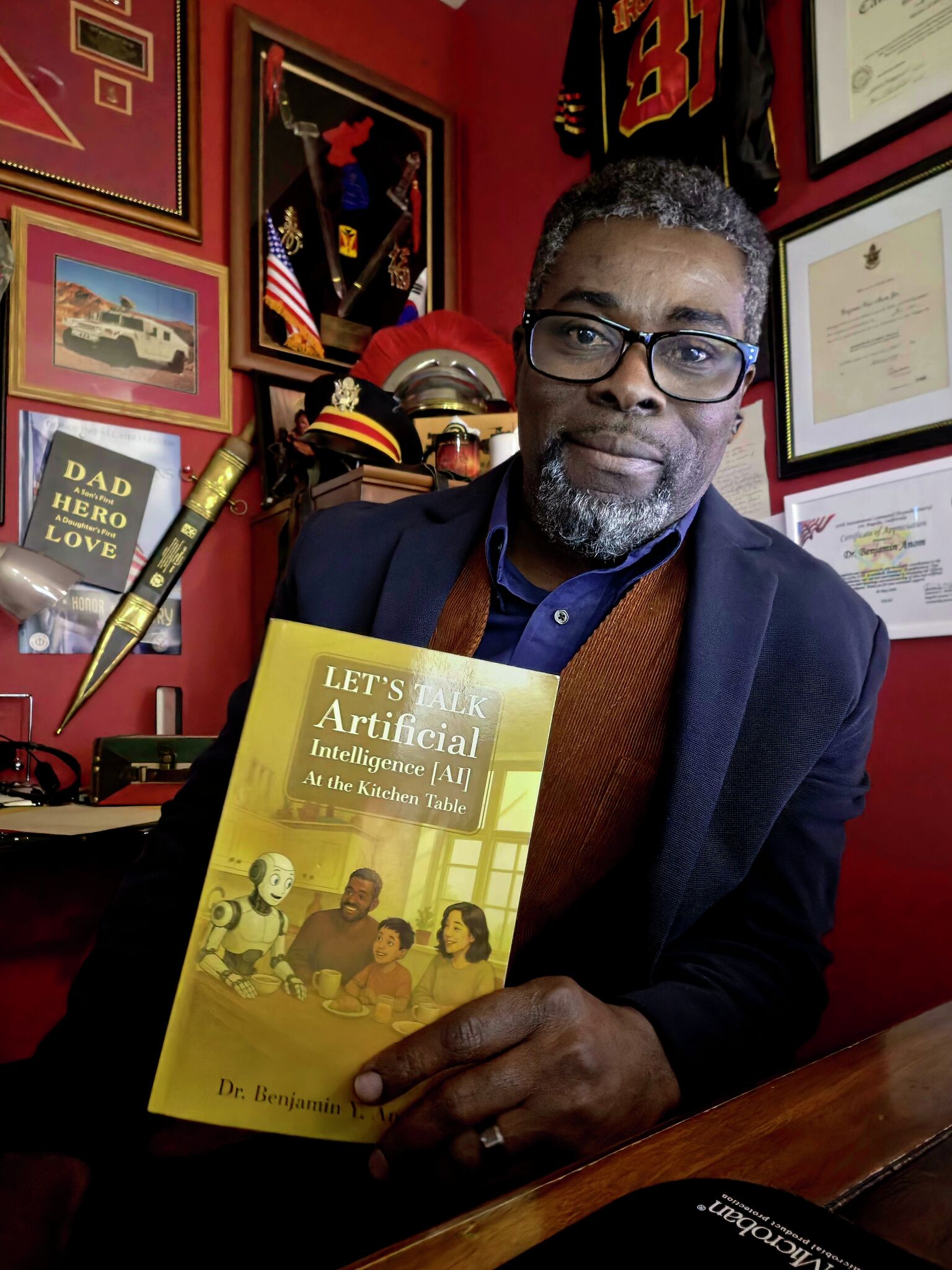
Q: You recently published "Let's Talk Artificial Intelligence at the Kitchen Table." Can you tell readers what they can expect from your book? Dr. Anom's book aims to explain AI in a non-technical way, making it accessible to all readers. It covers the creation process of AI, everyday AI phenomena, its impact on industries and jobs, and the associated risks and ethical dilemmas like data privacy, biases, and the challenges of regulation. The book also delves into current AI policies and legal cases, emphasizing responsible use while harnessing its benefits. Q: How did you become an expert in AI? Dr. Anom's expertise in AI stems from his academic background in applied statistics, data analytics, and big data technologies. His research primarily focused on big data technologies and data ethics, where he developed a particular interest in AI, especially concerning its ethical implications in medicine. Q: Along with working in the technology space, you're also an Army veteran and educator. How have your passions informed your career background? His military service, driven by a sense of duty, instilled leadership qualities and the value of serving others. As an educator and youth soccer coach, he is passionate about positively influencing young lives and shaping their future, believing this same passion informs his approach to his technology career. Q: Do you think people should embrace AI, be cautious of it, or fall somewhere in the middle? Dr. Anom believes AI is here to stay and must be embraced. He views AI as a 'double-edged sword' and advocates for understanding both its opportunities and potential harms. He stresses that AI is beneficial when created and used ethically, but detrimental otherwise. Q: What inspired you to write a book? The book was inspired by the widespread panic, frustration, and anxiety surrounding AI's rapid integration into daily life, affecting parents, students, professionals, and citizens concerned about privacy, environmental issues, and discrimination. His goal is to help readers understand AI's permanence and the urgent need for societal guardrails to prevent adverse outcomes. Q: Do you have a favorite AI tool that you use? Dr. Anom states that he loves 'all things AI' and that his favorite tool is 'situation-dependent,' implying he uses various tools as needed. Q: What advice do you have for those who are interested in pursuing a career in technology? He encourages aspiring tech professionals, highlighting the growing demand in the sector. He advises focusing on uniquely human skills that AI cannot replicate: critical thinking (analyzing complex problems, questioning automated outputs), context intelligence (understanding social, cultural, environmental conditions), and emotional intelligence (building relationships, understanding emotions and cultures). He suggests investing in both human-centric technical training and soft skills, viewing AI tools as collaborative partners to boost productivity rather than competitors.
Q: You recently published "Let's Talk Artificial Intelligence at the Kitchen Table." Can you tell readers what they can expect from your book?
Dr. Anom's book aims to explain AI in a non-technical way, making it accessible to all readers. It covers the creation process of AI, everyday AI phenomena, its impact on industries and jobs, and the associated risks and ethical dilemmas like data privacy, biases, and the challenges of regulation. The book also delves into current AI policies and legal cases, emphasizing responsible use while harnessing its benefits.
Q: How did you become an expert in AI?
Dr. Anom's expertise in AI stems from his academic background in applied statistics, data analytics, and big data technologies. His research primarily focused on big data technologies and data ethics, where he developed a particular interest in AI, especially concerning its ethical implications in medicine.
Q: Along with working in the technology space, you're also an Army veteran and educator. How have your passions informed your career background?
His military service, driven by a sense of duty, instilled leadership qualities and the value of serving others. As an educator and youth soccer coach, he is passionate about positively influencing young lives and shaping their future, believing this same passion informs his approach to his technology career.
Q: Do you think people should embrace AI, be cautious of it, or fall somewhere in the middle?
Dr. Anom believes AI is here to stay and must be embraced. He views AI as a 'double-edged sword' and advocates for understanding both its opportunities and potential harms. He stresses that AI is beneficial when created and used ethically, but detrimental otherwise.
Q: What inspired you to write a book?
The book was inspired by the widespread panic, frustration, and anxiety surrounding AI's rapid integration into daily life, affecting parents, students, professionals, and citizens concerned about privacy, environmental issues, and discrimination. His goal is to help readers understand AI's permanence and the urgent need for societal guardrails to prevent adverse outcomes.
Q: Do you have a favorite AI tool that you use?
Dr. Anom states that he loves 'all things AI' and that his favorite tool is 'situation-dependent,' implying he uses various tools as needed.
Q: What advice do you have for those who are interested in pursuing a career in technology?
He encourages aspiring tech professionals, highlighting the growing demand in the sector. He advises focusing on uniquely human skills that AI cannot replicate: critical thinking (analyzing complex problems, questioning automated outputs), context intelligence (understanding social, cultural, environmental conditions), and emotional intelligence (building relationships, understanding emotions and cultures). He suggests investing in both human-centric technical training and soft skills, viewing AI tools as collaborative partners to boost productivity rather than competitors.