Quick Buzz Feed

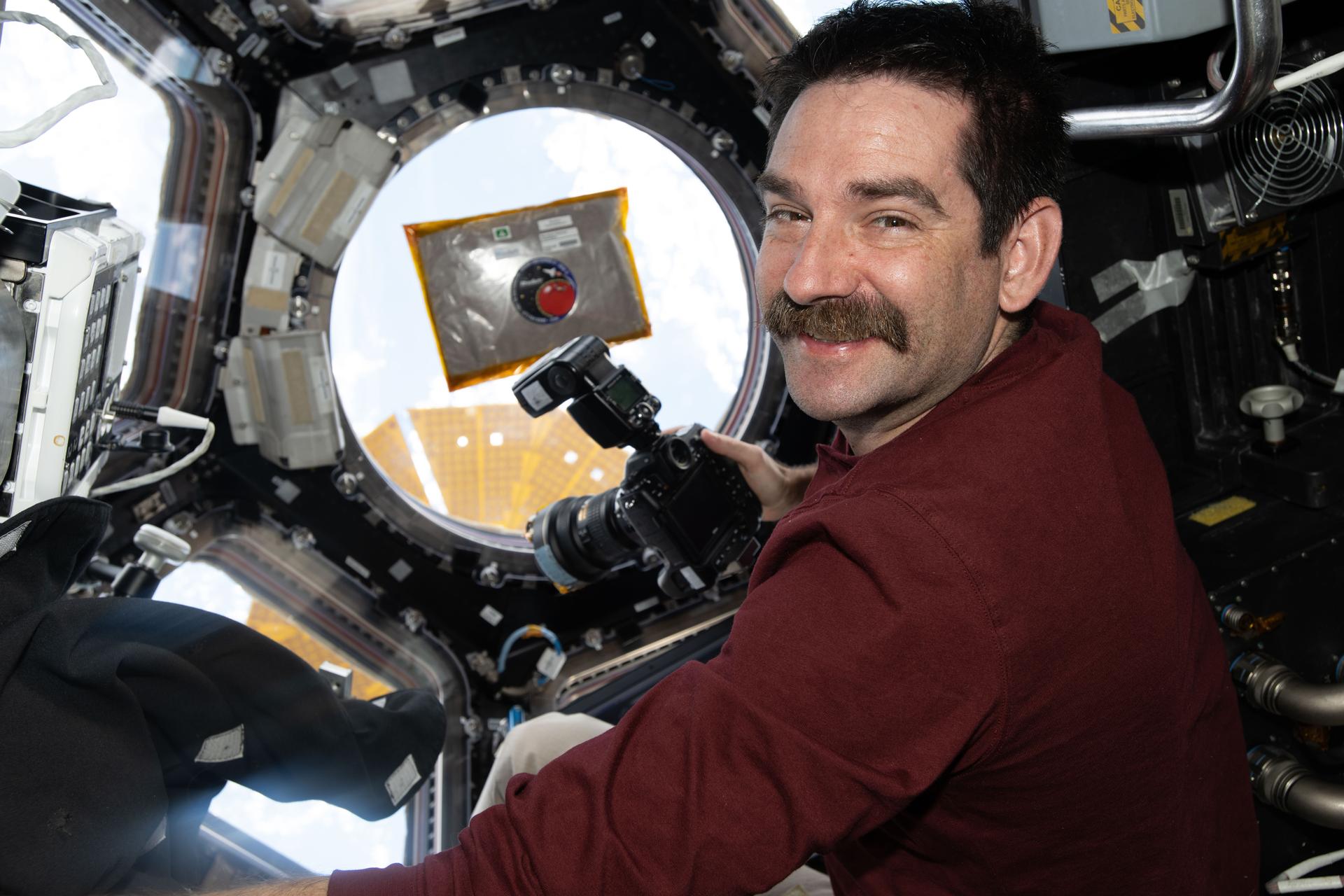
Spacewalk preparations are underway aboard the International Space Station as two astronauts check their spacesuits and review procedures. The Expedition 74 crew also experimented with augmented reality and artificial intelligence to conduct health checks in space. Meanwhile, a U.S. cargo spacecraft nears it departure this week.
NASA astronauts Jessica Meir and Chris Williams are actively preparing for an upcoming spacewalk scheduled for March 18. Their tasks include meticulously checking and maintaining their spacesuits, specifically cleaning the cooling loops and refilling components in the Quest airlock. They also reviewed critical procedures for the six-and-a-half-hour spacewalk, during which they will install a modification kit and route cables on the International Space Station's port side to facilitate the deployment of a future roll-out solar array, enhancing the station's power generation capabilities.
Flight engineers Jack Hathaway (NASA) and Sophie Adenot (ESA) conducted experiments using augmented reality and artificial intelligence for medical diagnostics. They performed ultrasound scans of each other's abdomen and vascular systems with the EchoFinder-2 biomedical device. The collected ultrasound images were then analyzed by an AI system to confirm organ identification. This innovative research aims to reduce the reliance on ground control for medical support, enabling astronauts to manage health issues more autonomously on deep-space missions.
Roscosmos cosmonauts Sergey Kud-Sverchkov and Sergei Mikaev engaged in biology experiments focused on understanding the human circulatory system in the weightless environment of space. They took turns measuring vital signs like blood pressure using specialized arm, wrist, and finger cuffs. Additionally, sensors were applied to their forehead, fingers, and toes to gather blood flow data, which was transmitted via Bluetooth for later analysis. This data is crucial for doctors to assess and comprehend the long-term effects of space living on astronauts' vascular health.
Flight engineer Andrey Fedyaev dedicated his day to critical life support system maintenance within the International Space Station's Roscosmos segment. His work included servicing the Elektron oxygen generator in the Zvezda service module by purging nitrogen and repressurizing its components. He also ensured the integrity of the station's drinking water supply by filtering and transferring water between various tanks, thus preventing contamination and maintaining a clean, potable water source for the crew.
Northrop Grumman's Cygnus XL cargo spacecraft is scheduled to depart the International Space Station on Thursday, March 12, concluding its nearly six-month mission since its arrival on September 18, 2025. Prior to its departure, astronauts will finish loading Cygnus with trash and disposable items. Following this, the spacecraft will be prepared for its robotic detachment from the Unity module using the Canadarm2 robotic arm. Once released, Cygnus will undertake a controlled, fiery re-entry into Earth's atmosphere over the South Pacific Ocean.