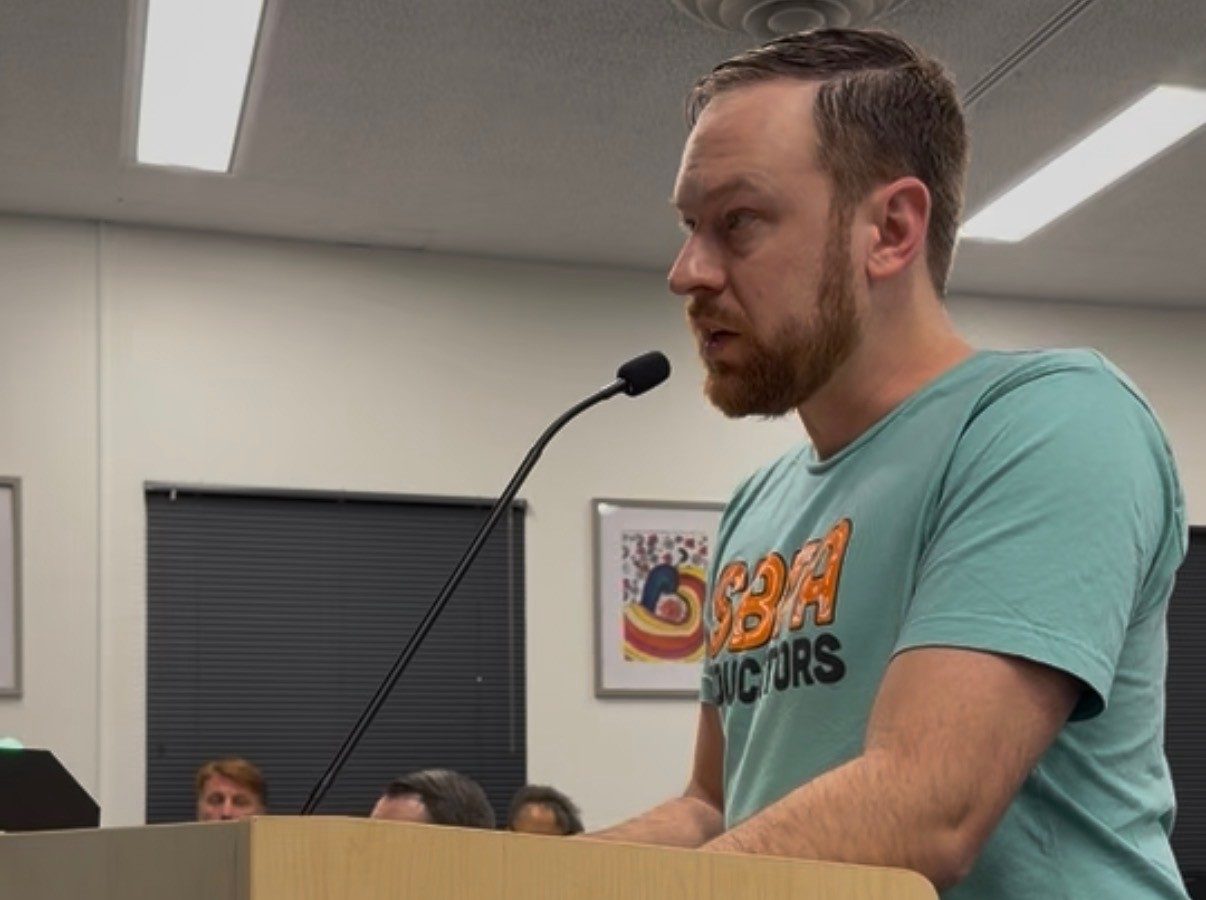
The superintendent’s AI task force met Thursday night, beginning their work to draft an AI regulation policy to present to the school board in November.
Formation of the AI Task Force and Initial Goals Students, parents, and teachers are advocating for a comprehensive Artificial Intelligence policy within the Santa Barbara Unified School District, demanding their involvement in its creation. Superintendent Hilda Maldonado's AI Task Force held its inaugural meeting of the academic year to initiate the policy-writing process, aiming for a finalized policy presentation to the school board by November. The formation of this task force emerged due to previous school board stalemates on AI discussions and a growing need to address the technology's presence in education. The core objectives include enhancing AI literacy among students, recognizing AI's inevitability in the modern workforce, and determining which educational components should remain human-centric despite technological advancements. The district acknowledges AI as a permanent fixture in society, making AI literacy a crucial skill for students. Rob Cooper, the IT director, emphasized the importance of student input, noting the participation of eleven students from various schools in the district. The task force is structured into four specialized focus groups: academic integrity, teacher guidelines and professional learning, data privacy, and board policy. Each group is tasked with reviewing and adapting the California Department of Education's model AI policy to fit SB Unified's specific needs, deciding what elements to retain, discard, or modify. The overall sentiment, despite recognizing AI's permanence, remains cautious, with a strong desire to preserve human-driven aspects of K-12 education and establish clear ethical boundaries. Academic Integrity and AI Usage Guidelines The academic integrity focus group concentrated on critical issues such as plagiarism, the necessity of disclosing AI tool usage, and proper citation practices. A key decision was that teachers should retain the autonomy to regulate AI use within their individual classrooms and develop rubrics that encourage students to critically evaluate their engagement with AI. Student Lena Shneider proposed that any AI-generated content should be formally recognized and treated as a legitimate source. Olivia Happel-Block, a teacher within this group, stressed that submitting AI-generated work directly should incur penalties akin to plagiarism. To ensure fairness, the group aims to establish clear, standardized guidelines on the required extent of AI usage disclosure. Furthermore, they recommended altering the model policy's phrasing from 'AI detection software' to simply 'AI detection,' highlighting a broader approach. Happel-Block articulated that software should not be the exclusive means of detection, suggesting it serve as merely the initial phase in a multi-stage, human-led process to ascertain potential AI misuse by students. This reflects a nuanced view that while AI detection tools are useful, human judgment and pedagogical understanding are indispensable in upholding academic honesty in an AI-integrated educational environment. Data Privacy Concerns for All Stakeholders The data privacy focus group addressed the critical matter of protecting personal information in the context of AI implementation. Their primary apprehension stemmed from the California Department of Education's model policy, which, in their view, was too narrowly focused on student data alone, inadvertently overlooking the privacy rights of teachers and school staff. Michael Terebessy, a member of this group, articulated the collective sentiment, stating that it is paramount to safeguard the privacy of all individuals within the educational ecosystem. He emphasized that teachers and staff, by nature of their roles, are 'very public figures,' making their data privacy equally, if not more, vulnerable and thus requiring explicit protection within any AI policy. The group advocates for an expanded definition of data privacy that comprehensively covers students, teachers, and administrative staff to ensure a holistic approach to privacy protection in the Santa Barbara school district. Human-Centered Curriculum and Addressing Teacher Distrust The teacher guidelines and professional learning group expressed a strong desire to rephrase sections of the model AI policy to prioritize human involvement, ensuring the educational experience remains centered on human interaction and development. While various concepts were explored regarding AI integration into curricula, there was unanimous consensus that all curriculum development, irrespective of AI content, must be exclusively human-authored. Victoria Martinez Penaranda, the student board member for SBUSD, who actively promoted student engagement with the task force, conveyed her optimism for AI's potential to alleviate burdensome administrative tasks for teachers, thereby freeing up more time for meaningful social connection within the classroom. Conversely, San Marcos High School teacher Charles Clow, also part of the board policy group, voiced significant apprehension. He believes AI fosters mistrust between students and teachers, and even among students themselves, particularly in the competitive environment of university applications. Clow characterized AI as a 'vehicle for folks to treat each other worse' and lamented the erosion of certainty regarding the originality of student work. Despite the district's initial hesitation in regulating AI tools, Clow, along with many educators, is keen for concrete policies. He and his group are set to deliver a preliminary policy draft for review and revision at the upcoming meeting on October 29. Clow concluded with a pointed analogy, questioning the appropriateness of AI chatbots in high school classrooms, likening it to bringing a 'forklift to the gym,' underscoring his belief that AI tools may be fundamentally unsuited for certain educational settings.
Formation of the AI Task Force and Initial Goals
Students, parents, and teachers are advocating for a comprehensive Artificial Intelligence policy within the Santa Barbara Unified School District, demanding their involvement in its creation. Superintendent Hilda Maldonado's AI Task Force held its inaugural meeting of the academic year to initiate the policy-writing process, aiming for a finalized policy presentation to the school board by November. The formation of this task force emerged due to previous school board stalemates on AI discussions and a growing need to address the technology's presence in education. The core objectives include enhancing AI literacy among students, recognizing AI's inevitability in the modern workforce, and determining which educational components should remain human-centric despite technological advancements. The district acknowledges AI as a permanent fixture in society, making AI literacy a crucial skill for students. Rob Cooper, the IT director, emphasized the importance of student input, noting the participation of eleven students from various schools in the district. The task force is structured into four specialized focus groups: academic integrity, teacher guidelines and professional learning, data privacy, and board policy. Each group is tasked with reviewing and adapting the California Department of Education's model AI policy to fit SB Unified's specific needs, deciding what elements to retain, discard, or modify. The overall sentiment, despite recognizing AI's permanence, remains cautious, with a strong desire to preserve human-driven aspects of K-12 education and establish clear ethical boundaries.
Academic Integrity and AI Usage Guidelines
The academic integrity focus group concentrated on critical issues such as plagiarism, the necessity of disclosing AI tool usage, and proper citation practices. A key decision was that teachers should retain the autonomy to regulate AI use within their individual classrooms and develop rubrics that encourage students to critically evaluate their engagement with AI. Student Lena Shneider proposed that any AI-generated content should be formally recognized and treated as a legitimate source. Olivia Happel-Block, a teacher within this group, stressed that submitting AI-generated work directly should incur penalties akin to plagiarism. To ensure fairness, the group aims to establish clear, standardized guidelines on the required extent of AI usage disclosure. Furthermore, they recommended altering the model policy's phrasing from 'AI detection software' to simply 'AI detection,' highlighting a broader approach. Happel-Block articulated that software should not be the exclusive means of detection, suggesting it serve as merely the initial phase in a multi-stage, human-led process to ascertain potential AI misuse by students. This reflects a nuanced view that while AI detection tools are useful, human judgment and pedagogical understanding are indispensable in upholding academic honesty in an AI-integrated educational environment.
Data Privacy Concerns for All Stakeholders
The data privacy focus group addressed the critical matter of protecting personal information in the context of AI implementation. Their primary apprehension stemmed from the California Department of Education's model policy, which, in their view, was too narrowly focused on student data alone, inadvertently overlooking the privacy rights of teachers and school staff. Michael Terebessy, a member of this group, articulated the collective sentiment, stating that it is paramount to safeguard the privacy of all individuals within the educational ecosystem. He emphasized that teachers and staff, by nature of their roles, are 'very public figures,' making their data privacy equally, if not more, vulnerable and thus requiring explicit protection within any AI policy. The group advocates for an expanded definition of data privacy that comprehensively covers students, teachers, and administrative staff to ensure a holistic approach to privacy protection in the Santa Barbara school district.
Human-Centered Curriculum and Addressing Teacher Distrust
The teacher guidelines and professional learning group expressed a strong desire to rephrase sections of the model AI policy to prioritize human involvement, ensuring the educational experience remains centered on human interaction and development. While various concepts were explored regarding AI integration into curricula, there was unanimous consensus that all curriculum development, irrespective of AI content, must be exclusively human-authored. Victoria Martinez Penaranda, the student board member for SBUSD, who actively promoted student engagement with the task force, conveyed her optimism for AI's potential to alleviate burdensome administrative tasks for teachers, thereby freeing up more time for meaningful social connection within the classroom. Conversely, San Marcos High School teacher Charles Clow, also part of the board policy group, voiced significant apprehension. He believes AI fosters mistrust between students and teachers, and even among students themselves, particularly in the competitive environment of university applications. Clow characterized AI as a 'vehicle for folks to treat each other worse' and lamented the erosion of certainty regarding the originality of student work. Despite the district's initial hesitation in regulating AI tools, Clow, along with many educators, is keen for concrete policies. He and his group are set to deliver a preliminary policy draft for review and revision at the upcoming meeting on October 29. Clow concluded with a pointed analogy, questioning the appropriateness of AI chatbots in high school classrooms, likening it to bringing a 'forklift to the gym,' underscoring his belief that AI tools may be fundamentally unsuited for certain educational settings.