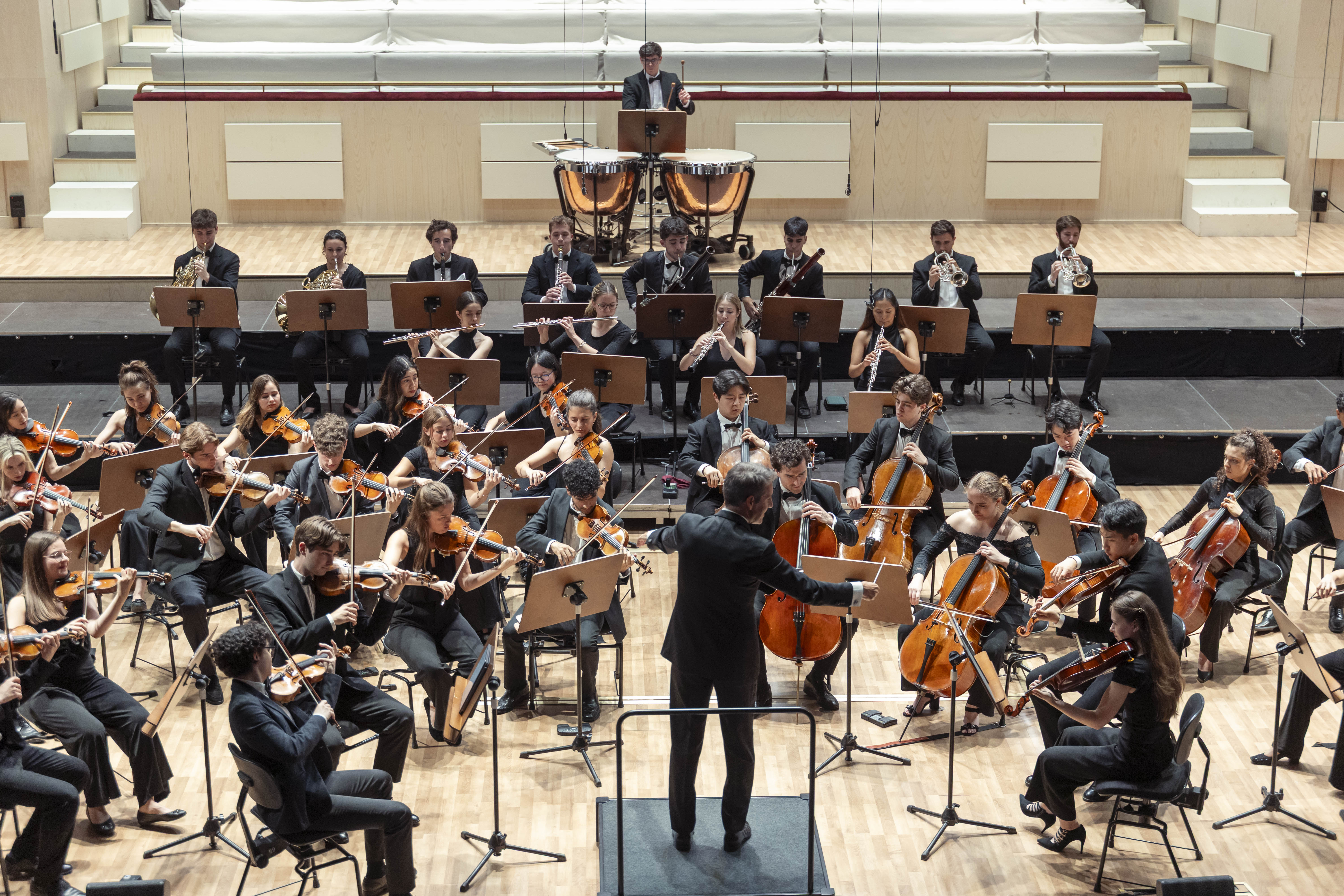
Telefónica and the Reina Sofía School of Music are promoting an innovative experience that explores new ways of connecting music, technology, and people. Nearly a thousand people will take part in this unique participatory concert where artificial intelligence and connectivity will give voice to the audience’s emotions through the orchestra’s performance.
An Innovative Blend of Music, Connectivity, and Artificial Intelligence Telefónica, in collaboration with the prestigious Reina Sofía School of Music, is spearheading an groundbreaking concert experience that redefines the intersection of classical music, cutting-edge technology, and human connection. Scheduled for Saturday, October 3, at Madrid’s historic Teatro Monumental, this event will feature a live performance of Johannes Brahms’ Symphony No. 4. What makes this concert truly unique is the integration of artificial intelligence and advanced connectivity directly into the fabric of the performance itself. This initiative serves as a tangible demonstration of Telefónica’s commitment to utilizing its robust network infrastructure to facilitate access to the most innovative technological advancements. The objective is to create a dynamic and participatory environment where technology enhances, rather than detracts from, the traditional symphonic experience, fostering new dialogues between performers and their audience. Real-Time Audience Engagement and Emotion-Driven Orchestration The core innovation of this concert lies in its interactive design, involving nearly a thousand audience members. Attendees will be empowered to participate directly in the performance through their personal mobile devices. During the introductory segment of Brahms’ symphony, the concert presenter will pose a series of questions live to the audience. These responses will be instantaneously collected and analyzed by an integrated artificial intelligence system. The AI’s function is to process this collective input in real time, translating it into a unified emotional reaction that will then be visually and conceptually reflected on the stage, becoming an integral part of the orchestral rendition. To maintain an element of excitement and surprise, the precise mechanisms and manifestations of this audience-driven interaction will be kept confidential until the concert commences, promising an unpredictable and deeply engaging experience for all. Empowering Music with a Collective Voice Through Technology Throughout the unique event, artificial intelligence transcends its typical role to become a singular, collective voice representing the audience's shared emotions. This innovative approach positions technology not merely as a tool for presentation but as an active participant, serving the profound artistry of music. It facilitates a novel form of dialogue between the musicians and their listeners, transforming the passive act of listening into an active, co-creative process. Beyond its artistic implications, this initiative also reinforces Telefónica’s broader institutional commitment as a company deeply invested in societal and cultural advancement. It underscores that Telefónica's mission extends far beyond its core business operations, demonstrating a dedication to fostering richer human experiences through technological innovation. Fostering Cultural Connection through Connectivity and Long-Term Collaboration Through this initiative, Telefónica vividly illustrates how advanced connectivity can be transformed into an indispensable component of the cultural experience. The company’s involvement extends beyond conventional corporate sponsorship, providing a concrete example of how technology can seamlessly intertwine people, groundbreaking ideas, and profound emotions in real time. This enables an unprecedented level of simultaneous interaction involving hundreds of attendees, sophisticated artificial intelligence, and live symphonic music. Rafael Fernández de Alarcón, Telefónica’s Brand Director, articulated the company's strategic vision, stating, 'At Telefónica, we embrace the challenge of becoming the best gateway for citizens to access digital technologies. This initiative demonstrates how connectivity and artificial intelligence can be placed at the service of people to enrich cultural experiences and create new forms of collective participation. We want to be a company committed to society and culture, beyond our own business.' This concert builds upon a long-standing partnership, as Telefónica has been a dedicated patron of the Telefónica Violin Chair at the Reina Sofía School of Music in Madrid since 1999, a globally recognized institution for musical excellence. Their decades of collaboration have consistently focused on developing cultural outreach projects that harness the power of music to connect diverse communities.
An Innovative Blend of Music, Connectivity, and Artificial Intelligence
Telefónica, in collaboration with the prestigious Reina Sofía School of Music, is spearheading an groundbreaking concert experience that redefines the intersection of classical music, cutting-edge technology, and human connection. Scheduled for Saturday, October 3, at Madrid’s historic Teatro Monumental, this event will feature a live performance of Johannes Brahms’ Symphony No. 4. What makes this concert truly unique is the integration of artificial intelligence and advanced connectivity directly into the fabric of the performance itself. This initiative serves as a tangible demonstration of Telefónica’s commitment to utilizing its robust network infrastructure to facilitate access to the most innovative technological advancements. The objective is to create a dynamic and participatory environment where technology enhances, rather than detracts from, the traditional symphonic experience, fostering new dialogues between performers and their audience.
Real-Time Audience Engagement and Emotion-Driven Orchestration
The core innovation of this concert lies in its interactive design, involving nearly a thousand audience members. Attendees will be empowered to participate directly in the performance through their personal mobile devices. During the introductory segment of Brahms’ symphony, the concert presenter will pose a series of questions live to the audience. These responses will be instantaneously collected and analyzed by an integrated artificial intelligence system. The AI’s function is to process this collective input in real time, translating it into a unified emotional reaction that will then be visually and conceptually reflected on the stage, becoming an integral part of the orchestral rendition. To maintain an element of excitement and surprise, the precise mechanisms and manifestations of this audience-driven interaction will be kept confidential until the concert commences, promising an unpredictable and deeply engaging experience for all.
Empowering Music with a Collective Voice Through Technology
Throughout the unique event, artificial intelligence transcends its typical role to become a singular, collective voice representing the audience's shared emotions. This innovative approach positions technology not merely as a tool for presentation but as an active participant, serving the profound artistry of music. It facilitates a novel form of dialogue between the musicians and their listeners, transforming the passive act of listening into an active, co-creative process. Beyond its artistic implications, this initiative also reinforces Telefónica’s broader institutional commitment as a company deeply invested in societal and cultural advancement. It underscores that Telefónica's mission extends far beyond its core business operations, demonstrating a dedication to fostering richer human experiences through technological innovation.
Fostering Cultural Connection through Connectivity and Long-Term Collaboration
Through this initiative, Telefónica vividly illustrates how advanced connectivity can be transformed into an indispensable component of the cultural experience. The company’s involvement extends beyond conventional corporate sponsorship, providing a concrete example of how technology can seamlessly intertwine people, groundbreaking ideas, and profound emotions in real time. This enables an unprecedented level of simultaneous interaction involving hundreds of attendees, sophisticated artificial intelligence, and live symphonic music. Rafael Fernández de Alarcón, Telefónica’s Brand Director, articulated the company's strategic vision, stating, 'At Telefónica, we embrace the challenge of becoming the best gateway for citizens to access digital technologies. This initiative demonstrates how connectivity and artificial intelligence can be placed at the service of people to enrich cultural experiences and create new forms of collective participation. We want to be a company committed to society and culture, beyond our own business.' This concert builds upon a long-standing partnership, as Telefónica has been a dedicated patron of the Telefónica Violin Chair at the Reina Sofía School of Music in Madrid since 1999, a globally recognized institution for musical excellence. Their decades of collaboration have consistently focused on developing cultural outreach projects that harness the power of music to connect diverse communities.