Quick Buzz Feed

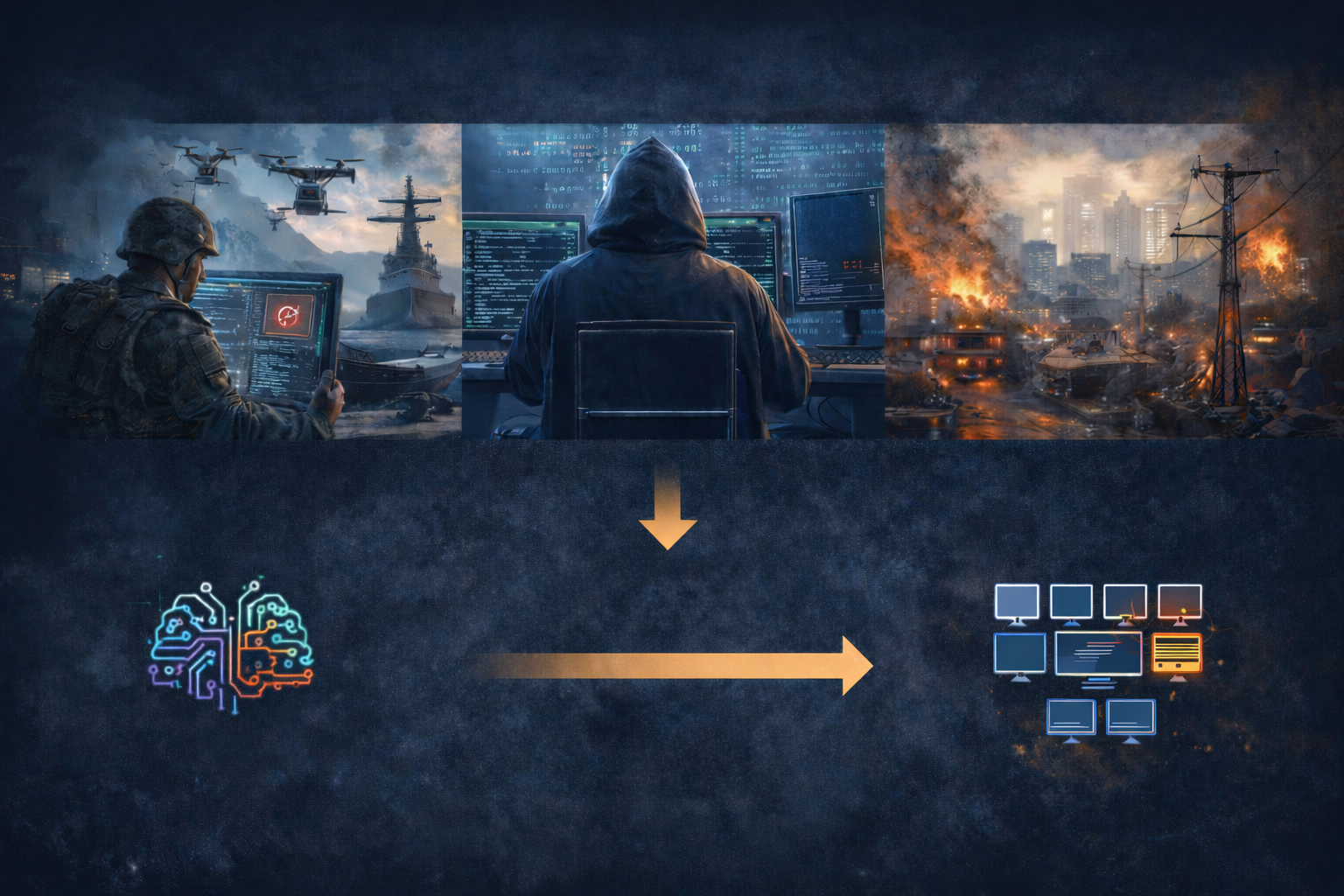
Read about how artificial intelligence can be weaponized to manipulate trust and how AI literacy is needed to combat malicious AI outputs
This section outlines how AI is rapidly changing military, cyber, and civil operations. It emphasizes AI's dual nature, offering advantages in data analysis and automation while introducing new vulnerabilities that adversaries can exploit. The abstract focuses on how AI can be weaponized to manipulate trust, accelerate cyber operations, and destabilize civilian infrastructure, with a particular focus on critical infrastructure, supply chains, and national energy systems. It highlights the implications for Civil Affairs forces operating at the nexus of governance, infrastructure, and civilian populations, and how AI-driven disinformation and cyber disruption can exploit disaster response and humanitarian efforts. The core message is the urgent need for a workforce capable of critically evaluating and securely using AI to combat these evolving threats to national security.
This section begins with a hypothetical scenario of an AI-induced communications failure during a military crisis, illustrating how subtle flaws introduced through manipulated data or malicious prompts can lead to system collapse without overt network breaches or missile launches. It highlights the pervasive integration of AI into military operations, cybersecurity, infrastructure management, and intelligence analysis, noting the benefits in speed and analytical capability. However, it warns of new vulnerabilities, especially when AI systems rely on external or opaque data. The text suggests that the primary weaponization of AI might not be autonomous weapons but rather the manipulation of information, cyber disruption, and destabilization of civilian systems, posing significant challenges for Civil Affairs forces involved in stability operations.
This section details how the authoritative and logical appearance of AI-generated responses can be exploited. Users tend to trust AI outputs, especially when presented with technical detail, creating a critical vulnerability. Adversaries can influence AI systems through poisoned datasets, malicious prompts, or compromised information retrieval, leading to credible-looking but subtly flawed or dangerous information. This threat extends beyond simple misinformation to credible misinformation that manipulates user trust, particularly in technical fields like coding, engineering troubleshooting, and cybersecurity. The article emphasizes that this form of AI weaponization is fundamentally about undermining trust, leveraging AI's ability to scale information generation and distribution within the cognitive domain of modern warfare.
This part explains how AI accelerates cyber warfare by enabling machine learning tools to analyze code, find vulnerabilities, create malicious scripts, and automate digital infrastructure reconnaissance. It references significant cyber incidents like the SolarWinds supply chain attack (malicious code in trusted updates), Stuxnet (disrupting industrial infrastructure), the 2015 Ukraine electrical grid attack, and the 2017 NotPetya malware attack (disrupting global logistics, attributed to a nation-state). A key concern is AI's potential to propagate attacks across interconnected systems; a single compromised AI output (faulty code, flawed configurations, malicious logic) can spread through networks, software updates, and infrastructure management, creating cascading disruptions, especially in military logistics and command-and-control systems.
This section shifts focus from state actors to criminal organizations, noting their increasing reliance on cybercrime for revenue. AI tools significantly enhance their capabilities by automating phishing, generating malicious scripts, identifying vulnerabilities, and conducting large-scale social engineering attacks. Voice synthesis technology allows criminals to impersonate executives or government officials for financial fraud. The Colonial Pipeline ransomware attack is cited as an example where criminal cyber activity escalated to a national security issue due to its disruption of critical infrastructure. The central argument is that AI lowers the technical entry barrier for such operations, enabling smaller groups to achieve disproportionately large strategic impacts.
This section connects AI threats to military doctrine, specifically Field Manual 3-07 on stability operations and Joint Publication 3-57 on civilian engagement. It posits that Civil Affairs forces, operating at the intersection of governance, infrastructure, and technology, are vulnerable to AI-enabled cyber operations. Historical examples like the post-2003 Iraq invasion instability (due to collapse of essential services) illustrate how disrupting civil infrastructure (electrical grids, transportation, water, finance) can prevent the restoration of stable governance, even without direct military defeat. This highlights how AI can be a strategic tool for adversaries to achieve objectives in the civil domain.
This part explores how disaster and humanitarian environments amplify AI-related risks. Natural disasters create vulnerabilities like damaged infrastructure and disrupted communications, which adversaries can exploit. Civil Affairs forces, often coordinating relief efforts, face threats from AI-generated disinformation (already recognized in emergency management) and cyber attacks on humanitarian logistics. Such attacks could disrupt the delivery of vital supplies like food, water, and medicine. The fundamental point is that in these sensitive contexts, manipulating information through AI can be as destabilizing as physical infrastructure destruction, impacting human lives and stability.
This section aligns AI's impact with the Army's Multi-Domain Operations concept, which acknowledges future conflicts across land, air, maritime, space, cyber, and information environments. AI has the unique capability to influence multiple domains simultaneously. For instance, AI-enabled cyber operations can disrupt infrastructure crucial for military logistics, while disinformation campaigns can sway public opinion and destabilize governance. Criminal networks, empowered by AI, can create widespread instability or economic disruption. For Civil Affairs, this underscores that AI is not just a technological advancement but a strategic factor fundamentally reshaping the modern battlespace due to its interconnected nature.
This section emphasizes the critical need for a workforce trained to responsibly utilize AI. It describes AI as a 'force multiplier' for human experts in various professional fields, including engineering (system analysis), cybersecurity (anomaly detection), and intelligence (pattern identification). The core argument is that educating professionals to critically evaluate AI outputs and recognize misinformation embedded within them is a national security imperative. This preparation ensures that the advantages of AI are harnessed securely while mitigating the risks of manipulation and accidental vulnerabilities.
This concluding section reiterates that artificial intelligence is a transformative force for global security, offering benefits in intelligence, cyber defense, and decision-making. However, it also highlights the significant threat of AI weaponization, specifically its capacity to manipulate trusted information, accelerate cyber warfare, empower criminal networks, and destabilize civilian populations in fragile environments. The article concludes by emphasizing that the most dangerous AI weapon will likely not be autonomous machines, but rather the subtle influence it exerts on human decisions, especially those who rely on AI systems for assistance.