Quick Buzz Feed

Artificial intelligence has been built by robbing the collective work of humanity. The public built AI — we should own it, not a handful of billionaires.
Silicon Valley is experiencing unprecedented investment in artificial intelligence, with projections of $700 billion this year alone, leading AI stocks to constitute a significant portion of the entire stock market. This investment frenzy is openly driven by the goal of making large segments of the workforce redundant, leading to concerns about the creation of a permanent "underclass" of unemployed or low-wage workers, as articulated by tech leaders like Dario Amodei. The article warns that this explosive growth is highly suggestive of a speculative bubble, potentially the largest in history, whose inevitable burst could trigger a global economic collapse. This dual threat of mass unemployment and financial instability presents an immense social and economic challenge that governments must address.
The article rejects typical government responses to economic crises, such as corporate bailouts that disproportionately benefit firms and shareholders while demanding sacrifices from workers, citing the 2008 auto industry bailout as a failed precedent. It argues that such bailouts are economically insufficient for the overcapitalized AI industry and lack moral justification, especially given the technology's uncertain impact on job creation versus destruction. Furthermore, the piece dismisses "Neo-Luddite" calls to halt AI development as impractical due to overwhelming economic incentives that would simply shift innovation overseas. It also critiques "tech-friendly progressive reformers" who advocate for reactive measures like universal basic income or job retraining, arguing that such approaches falsely present technological progress and its negative consequences as uncontrollable forces of nature, thereby concealing the human decisions and ownership structures that shape AI's trajectory and its societal effects.
The author builds a compelling case for public ownership of AI based on both moral and patriotic grounds. Morally, society has a direct claim to AI because its development relies heavily on collective human effort, including government investments that fostered the tech sector, and the wholesale expropriation of countless human-generated creative works (books, music, videos) used to train large language models. This collective intellectual labor remains uncredited and unpaid, while generating immense profits for a select group of tech billionaires. Patriotism also mandates public ownership, as the so-called "AI race" is primarily a competition between private corporations, not nations, meaning the vast spoils benefit only an oligarchy. This creates a fundamental contradiction where citizens contribute significantly through taxes and intellectual property but receive no direct rewards, while powerful tech elites demonstrate a lack of loyalty to the democratic state that facilitated their success.
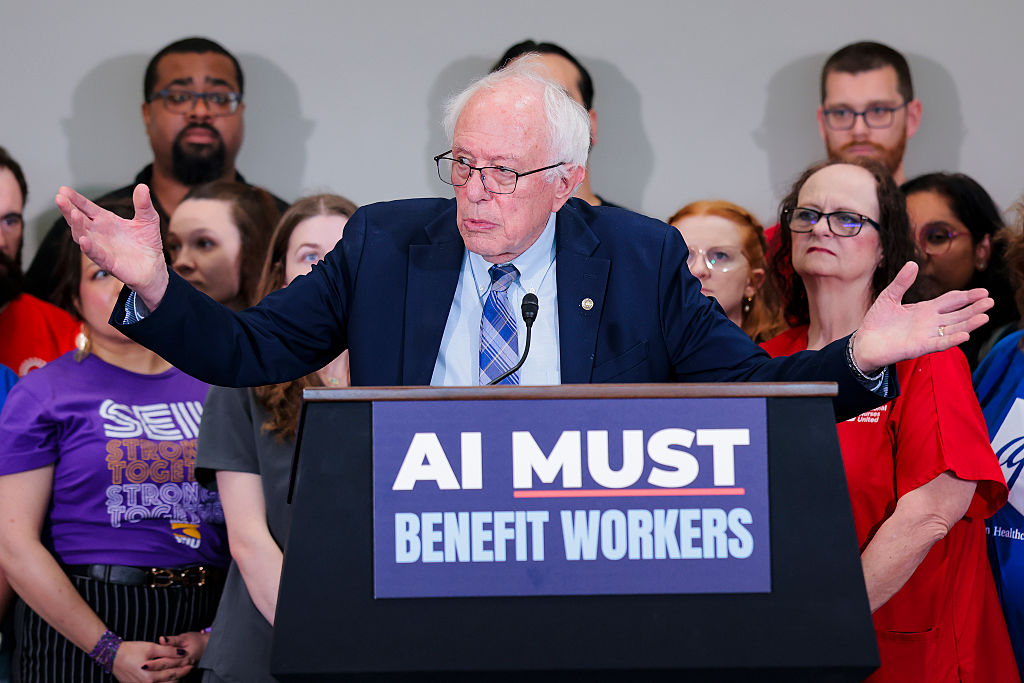
To reconcile the conflict between collectively created wealth and privatized gains, the article proposes nationalizing AI, an idea it suggests will become more palatable if the AI bubble bursts or widespread economic disruption occurs. It points to Senator Bernie Sanders's proposal for an "American AI Sovereign Wealth Fund," which would acquire 50% of major AI companies' stock, mirroring funds for natural resources. This initiative is presented not as a handout but as a justifiable reclamation of socially generated wealth for public benefit. Such a move could significantly address the growing wage disparity between college-educated and non-college-educated workers, and fundamentally reorient domestic politics away from the undue influence of high finance and Big Tech. By redirecting AI-generated wealth, the public could fund essential social programs, renew infrastructure, boost education, and invest in sustainable energy and advanced manufacturing, leading to a truly transformative and publicly-minded economy.