Quick Buzz Feed

More and more, students are using artificial intelligence to complete assignments, creating a predicament for college professors. Some faculty limit AI, while others are concerned about over-reliance on programs like ChatGPT, impacting academic integrity and student engagement.
The article highlights the increasing prevalence of students utilizing artificial intelligence for academic tasks, posing a significant challenge for university professors. This trend forces educators to grapple with issues of academic integrity as students increasingly rely on advanced AI chatbots like ChatGPT, which emerged in 2022, to complete assignments. This creates a predicament where professors must adapt their teaching and assessment methods to ensure students are producing original, honest work.
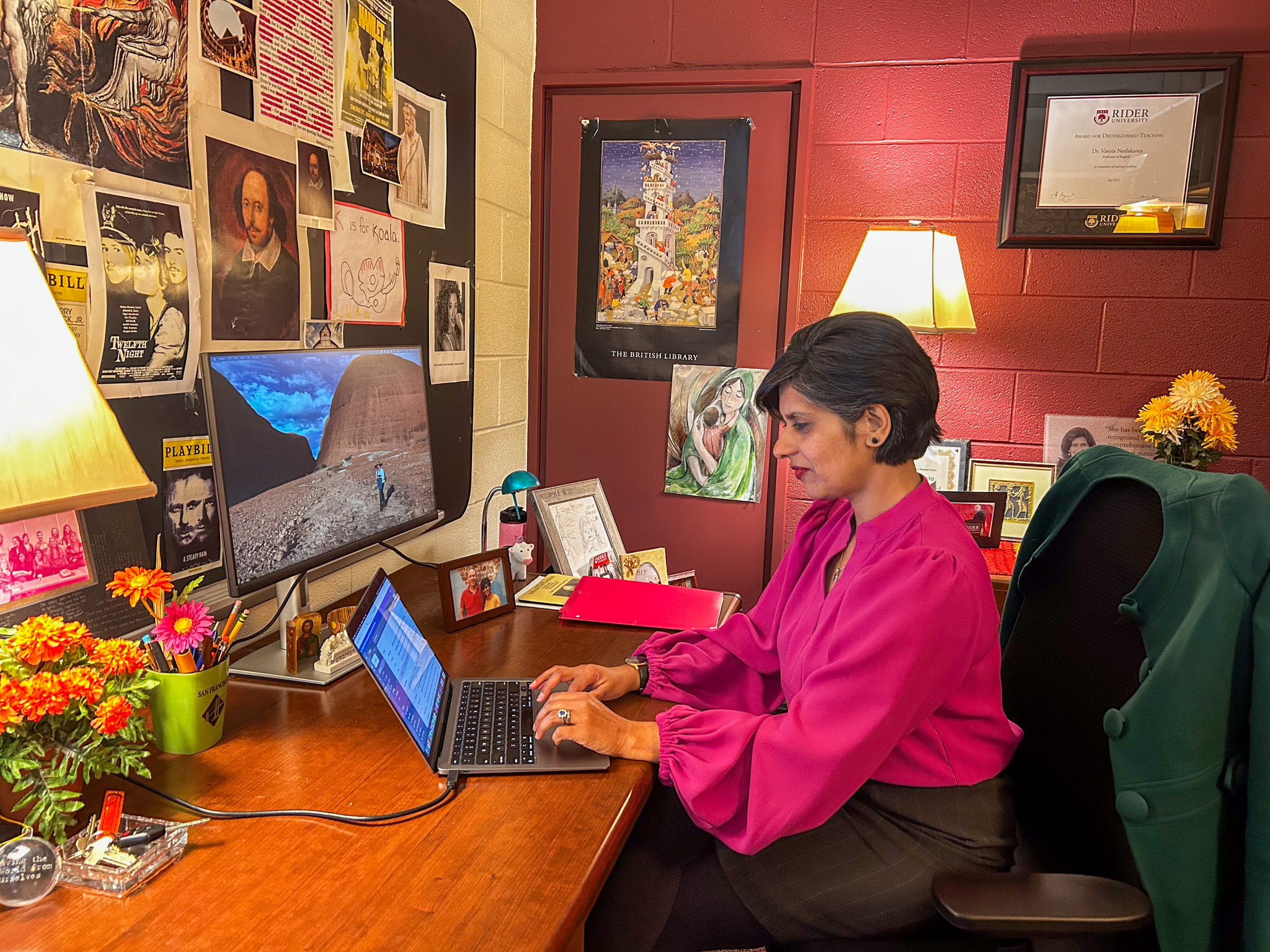
English Professor Vanita Neelakanta has adopted a firm stance against AI, opting for traditional in-class blue book examinations. This policy was reportedly met with relief from her students, who appreciated the assurance of a fair and level playing field where all submissions would be genuinely their own. This reflects a broader faculty effort to counteract AI-driven plagiarism and foster authentic learning.
Junior political science major Zack Leshner voiced concerns about the fairness of AI usage, particularly in competitive environments such as Model United Nations, where participants used AI for position papers. This underscores the ethical questions arising from AI in academia. Professor Megan Titus noted that AI-generated work often displays a distinct "voice" or style that deviates from a student's typical writing, making detection possible even without specialized tools, mirroring traditional plagiarism detection.
While challenges exist, AI also presents potential benefits for higher education. A 2025 University of St. Augustine article suggests AI can facilitate inclusive education for diverse learning styles and provide crucial resources, like translations, for non-English speakers. It can also enhance administrative efficiency, freeing professors to focus more on student support. However, concerns persist, as some educators, like History and Philosophy Chairwoman Nikki Shepardson, observe a decrease in student engagement and analytical depth due to AI reliance, viewing it as contradictory to the goal of fostering independent thought.
Professors like Megan Titus and Nikki Shepardson have adapted their assignment designs to make AI use detectable and less effective. Titus, who also teaches about AI in her "professional writing and emerging technologies" class, enforces a strict "no AI policy" in other courses, giving zeros for AI-assisted work with an option to redo. Shepardson similarly designs history analysis assignments that require deep engagement with historical documents, making it evident when students use AI, which she finds "scary" because it bypasses genuine analysis and critical thinking.
The article explores varying student attitudes towards AI. Tazabrie Morales, a junior graphic design major, actively avoids AI, fearing her work would be perceived as "lazy." This highlights a concern among some students about the impact on their reputation and skill development. Conversely, senior cybersecurity major Jordyn Bostick exemplifies a more utilitarian view, using AI for practical applications like optimizing resumes, brainstorming, and improving time management, with her professors actively encouraging its responsible integration into her cybersecurity studies.