Quick Buzz Feed

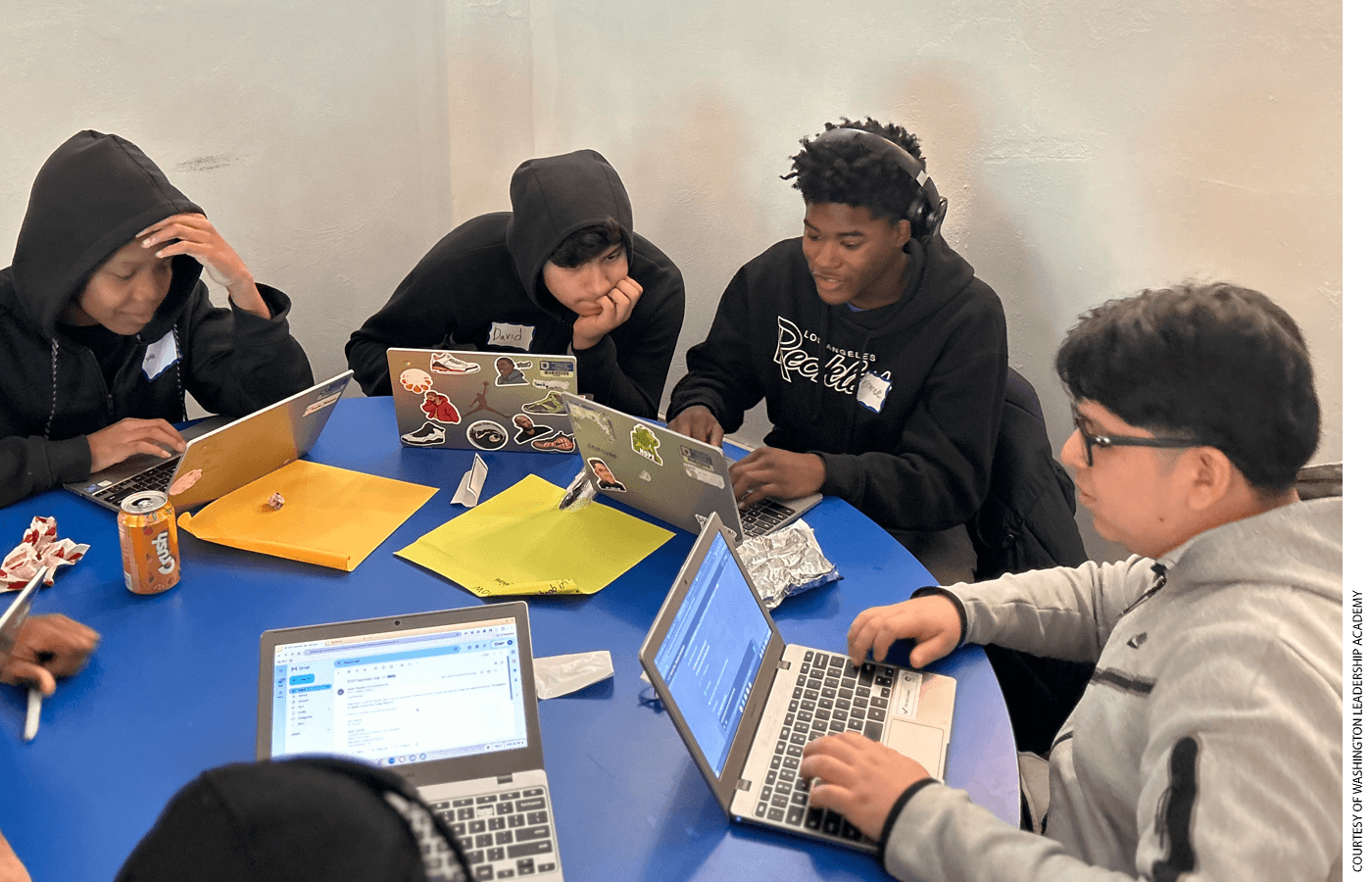
Washington Leadership Academy (WLA), a D.C. public charter high school, is pioneering the integration of generative artificial intelligence (AI) into its curriculum and operations. Despite the general lack of clear policy guidance in U.S. schools, WLA is using AI to address real-world problems through events like Hackathons and is focused on correcting longstanding education inequity by ensuring its predominantly Black, Brown, and low-income students gain crucial AI literacy. The school's extensive experience offers a critical early look at the possibilities and challenges of AI adoption in education.
WLA swiftly embraced AI after ChatGPT's 2022 release, forming an AI task force despite initial staff resistance over potential plagiarism, job security fears, and increased workload. Executive director Eric Collazo, initially skeptical, became a proponent after seeing AI's practical benefits, like generating motivational metaphors. WLA's agile single-site charter structure, willingness to innovate without established models, and investment in premium AI tools facilitated rapid experimentation. Today, AI is pervasive across the school, with all freshmen taking a computer science course covering AI/machine learning, and 85% of teachers using AI professionally, guided by a rubric for appropriate student AI use.
WLA teachers deploy AI in diverse instructional methods. Giani Clarkson's AP Government class uses AI chatbots for simulated historical conflicts, prompting students to analyze outcomes. Math coach Niyesha Coleman developed a gamified chatbot that occasionally provides incorrect answers, teaching students critical thinking and AI limitations. WLA emphasizes comprehensive AI literacy, enabling two-thirds of students to use AI tools effectively while understanding their potential for both help and harm. While AI's impact on formal learning metrics is still emerging, teachers report increased student confidence and engagement. Adam Browning, an AP Psychology teacher, leveraged AI to generate practice questions for a revised AP curriculum, significantly improving student scores. Beyond instruction, teachers utilize AI for administrative tasks, such as creating parent newsletters, saving up to six hours weekly, and WLA's chief innovation officer automates attendance tracking to proactively identify struggling students.
Despite its progressive AI integration, WLA confronts anxieties among students and teachers regarding job displacement and the erosion of human connection. The school fosters open dialogue through professional learning sessions, encouraging staff to articulate fears and discuss the future of teaching with AI. Teachers, like Adam Browning, actively guide students in critically evaluating AI and understanding when to 'push back' on its use to safeguard human creativity.
The pervasive issue of students using AI tools like ChatGPT to cheat presents ongoing challenges at WLA and nationwide. The school's approach redefines cheating, questioning whether assignments easily completed by AI truly promote deep thinking or merely superficial completion. This encourages educators to design more rigorous tasks less susceptible to AI exploitation. Teachers adopt diverse strategies, from integrating AI use as a skill within assignments (level four AI use) to conducting assessments with no technology. WLA's AI use rubric clearly defines expectations, and violations result in educational interventions and disciplinary actions, forcing a re-evaluation of how learning is genuinely measured.
The privacy of student data is a critical national concern, as the Family Educational Rights and Privacy Act (FERPA) is outdated for the complexities of the AI era. WLA addresses this by meticulously selecting FERPA-compliant AI tools that ensure vendors do not sell or share student data and maintain robust security standards. For non-compliant tools like ChatGPT, staff are diligently reminded to manually remove all sensitive student information, highlighting the school's proactive efforts within an inadequate regulatory framework.
WLA's independent AI integration highlights a national void in policy guidance from federal and local education officials, leading to widespread inconsistency in AI adoption. Most schools lack the necessary leadership and resources for such self-directed experimentation. While significant progress is now being made, with 35 states issuing AI guidelines and numerous legislative proposals focusing on literacy, integration, and guardrails, these efforts are often overdue. The upcoming 2029 PISA exam will include an AI literacy assessment, emphasizing its growing importance as a foundational workforce skill. WLA's experience underscores the urgent need for dedicated funding, clear standards for AI literacy, and collaborative networks to ensure equitable and effective AI deployment in all schools.