Quick Buzz Feed

An indictment has been unsealed charging Yih-Shyan “Wally” Liaw, Ruei-Tsang “Steven” Chang, and Ting-Wei “Willy” Sun, for allegedly conspiring to divert high-performance computer servers assembled in the United States and integrating sophisticated U.S. artificial intelligence technology to China, in violation of U.S. export controls laws.
An indictment has been unsealed, charging Yih-Shyan “Wally” Liaw, Ruei-Tsang “Steven” Chang, and Ting-Wei “Willy” Sun. They are accused of conspiring to unlawfully divert high-performance computer servers, integrating sophisticated U.S. artificial intelligence technology, to China in violation of U.S. export controls laws. Liaw and Sun were arrested today in the Northern District of California, while Chang remains a fugitive.
Assistant Attorney General John A. Eisenberg stated that the alleged scheme used false documents, staged dummy servers, and convoluted transshipment to conceal the true destination of restricted AI technology – China. He underscored the importance of enforcing export-control laws to protect U.S. ingenuity and advantage. FBI Assistant Director Roman Rozhavsky highlighted that the investigation revealed efforts to sell billions of dollars’ worth of sensitive AI technology to China, which is a direct threat to national security and a top FBI priority.
U.S. Attorney Jay Clayton and FBI Assistant Director in Charge James C. Barnacle, Jr. elaborated on the systematic scheme to divert massive quantities of U.S. AI technology to China. They described a 'tangled web of lies, obfuscation, and concealment' used to drive sales and generate revenues illegally. This included fabricating documents, staging bogus equipment for audits, and using a pass-through company to hide their misconduct and true clientele, all of which pose a direct threat to U.S. national security.
The U.S. Department of Commerce has implemented license requirements for the export and reexport of artificial intelligence technologies to China and Hong Kong. These measures are designed to protect U.S. national security and foreign policy interests by restricting items that could contribute significantly to military potential or nuclear proliferation. Advanced AI accelerator chips and servers are specifically subject to these export license requirements due to their strategic significance and the unacceptable risk their transfer to China poses to national security.
Yih-Shyan Liaw is identified as a co-founder, board member, and Senior Vice President of Business Development for a publicly traded U.S.-based manufacturer of high-performance AI computer servers. Ruei-Tsang Chang is a general manager in the U.S. Manufacturer’s Taiwan office. Ting-Wei Sun acted as a third-party broker and 'fixer' for diverting U.S.-export controlled technology to China. Together, these individuals allegedly conspired to systematically divert the manufacturer's servers with specific GPUs to China without the necessary licenses.
The scheme involved Liaw and Chang directing a Southeast Asian company, 'Company-1,' to place purchase orders with the U.S. Manufacturer for servers equipped with certain GPUs, ostensibly for Company-1's own use. These servers, often assembled in the United States, were then shipped to Taiwan, and subsequently repackaged by a shipping and logistics company into unmarked boxes to conceal their contents before being sent to their final destinations in China. False documentation and communications were used to get these allocations approved internally.
From 2024 to 2025, Company-1 acquired approximately $2.5 billion worth of servers from the U.S. Manufacturer, a significant portion of which were illegally diverted to China. The scheme escalated, with at least $510 million worth of U.S.-assembled servers unlawfully sent to China between late April and mid-May 2025 alone, demonstrating the massive scale of the defendants' operation.
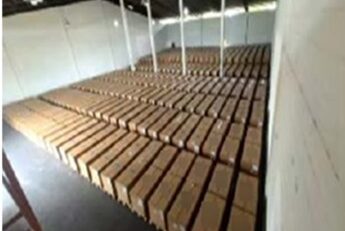
A key aspect of the concealment strategy involved staging thousands of 'dummy' servers – non-working physical replicas of the manufacturer's servers – at Company-1's rented warehouses. These fake servers were used to mislead audits conducted by the U.S. Manufacturer's compliance team and later by the U.S. Department of Commerce, while the actual, restricted servers had already been unlawfully shipped to China.
The defendants and their co-conspirators utilized encrypted messaging applications to coordinate various aspects of the scheme, including server quantities for orders, shipping locations in China, and tactics to evade detection by the U.S. Manufacturer's compliance team and U.S. authorities. Crucially, at no point did the defendants or the U.S. Manufacturer possess a valid license from the U.S. Department of Commerce to export or reexport these servers to China.
Liaw, Chang, and Sun face three counts each: conspiring to violate the Export Controls Reform Act, carrying a maximum sentence of 20 years; conspiring to smuggle goods from the United States, with a maximum of 5 years; and conspiring to defraud the United States, also with a maximum of 5 years. These maximum potential sentences are provided for informational purposes, with actual sentencing to be determined by a judge.
The investigation was a collaborative effort involving the FBI, the Department of Commerce’s Bureau of Industry and Security, and the Department of Justice’s National Security Division, Counterintelligence and Export Control Section. The case is being prosecuted by Assistant United States Attorneys Juliana N. Murray, David J. Robles, and Kevin T. Sullivan from the Southern District of New York, alongside Trial Attorneys Maria Fedor and Mark Murphy from the National Security Division.