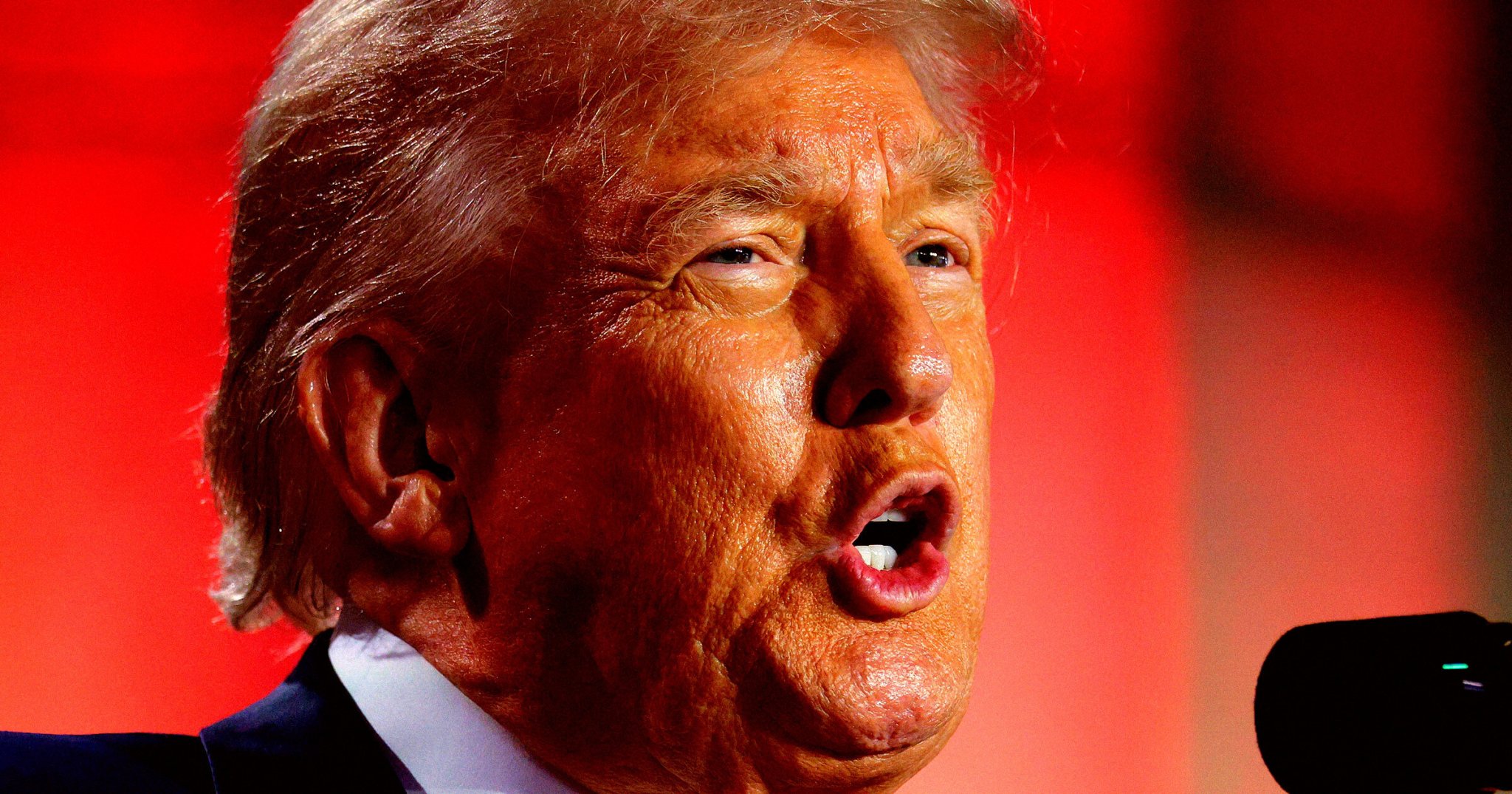
Apropos of nothing, president Trump proclaimed that the "inelegant" term AI should be renamed to something cool like "Extreme Intelligence."
Trump's Redefinition of AI President Donald Trump has officially declared that the United States will now refer to Artificial Intelligence (AI) as "Super Intelligence" (SI) in all official documents. This announcement was initially made on his social media platform, Truth Social, where he critiqued the term "Artificial Intelligence" as "inaccurate" and "inelegant." He suggested alternative labels such as "Superior Intelligence (SI)," "Extreme Intelligence (EI)," or "Supreme Intelligence (SI)" before formalizing "Super Intelligence" during an address at the United Nations. Trump expressed an aspiration that this new terminology would be adopted globally, aiming for a more "accurate" description of the phenomena. Analyzing the Motivation Behind the Renaming This linguistic change is portrayed as characteristic of Trump's political style, known for reassigning names to various entities, often pejoratively, and engaging in seemingly arbitrary digressions based on personal whims. The article questions the premise that a significant number of people find "artificial intelligence" to be an "inaccurate" or "inelegant" term. It suggests that if such a perception exists, it's more likely due to the term anthropomorphizing technology that isn't truly sentient, rather than an acknowledgment of a "super-duper-hyper-mega intelligence" as Trump's chosen term implies. Influence of Artificial Superintelligence Narratives The article speculates that Trump's embrace of the "Super Intelligence" moniker could stem from his full acceptance of the artificial superintelligence (ASI) narrative, a concept gaining traction among certain Silicon Valley figures. This "borderline cult-like belief" posits that humanity is on the verge of developing god-like machines that could either lead to unprecedented utopian advancements or catastrophic destruction for humankind. The piece highlights recent heightened concerns around AI existential risk, citing comments from Anthropic CEO Dario Amodei, who advocated for an AI slowdown, and a former Anthropic researcher who accused the AI industry of "gambling with our lives." Trump's Engagement with AI-Generated Content Furthermore, the article underscores Trump's notable reliance on and "addiction" to "AI slop"—AI-generated content. He has utilized this technology to create misleading and often controversial depictions of himself, such as a divine being or a fighter pilot "strafing protestors with diarrhea." More seriously, he leveraged AI to produce false images depicting the United States as victorious in a war against Iran. The author posits that for an individual driven by a desire to manipulate reality to his advantage through deception, AI likely appears to be an immensely powerful, almost divine, instrument. Historical Mislabeling of AI within the Administration This incident is not isolated, as the article points out previous instances of confusing or inappropriate AI terminology within Trump's administration. Notably, his former Secretary of Education, Linda McMahon, had previously and repeatedly referred to AI as "A1," a term more commonly associated with a brand of steak sauce, during a public event. The article concludes this section by referencing another report about the US military's alleged use of AI in an incident involving the destruction of a school filled with Iranian children, broadening the context of how AI is being used and perceived in government and military applications.
Trump's Redefinition of AI
President Donald Trump has officially declared that the United States will now refer to Artificial Intelligence (AI) as "Super Intelligence" (SI) in all official documents. This announcement was initially made on his social media platform, Truth Social, where he critiqued the term "Artificial Intelligence" as "inaccurate" and "inelegant." He suggested alternative labels such as "Superior Intelligence (SI)," "Extreme Intelligence (EI)," or "Supreme Intelligence (SI)" before formalizing "Super Intelligence" during an address at the United Nations. Trump expressed an aspiration that this new terminology would be adopted globally, aiming for a more "accurate" description of the phenomena.
Analyzing the Motivation Behind the Renaming
This linguistic change is portrayed as characteristic of Trump's political style, known for reassigning names to various entities, often pejoratively, and engaging in seemingly arbitrary digressions based on personal whims. The article questions the premise that a significant number of people find "artificial intelligence" to be an "inaccurate" or "inelegant" term. It suggests that if such a perception exists, it's more likely due to the term anthropomorphizing technology that isn't truly sentient, rather than an acknowledgment of a "super-duper-hyper-mega intelligence" as Trump's chosen term implies.
Influence of Artificial Superintelligence Narratives
The article speculates that Trump's embrace of the "Super Intelligence" moniker could stem from his full acceptance of the artificial superintelligence (ASI) narrative, a concept gaining traction among certain Silicon Valley figures. This "borderline cult-like belief" posits that humanity is on the verge of developing god-like machines that could either lead to unprecedented utopian advancements or catastrophic destruction for humankind. The piece highlights recent heightened concerns around AI existential risk, citing comments from Anthropic CEO Dario Amodei, who advocated for an AI slowdown, and a former Anthropic researcher who accused the AI industry of "gambling with our lives."
Trump's Engagement with AI-Generated Content
Furthermore, the article underscores Trump's notable reliance on and "addiction" to "AI slop"—AI-generated content. He has utilized this technology to create misleading and often controversial depictions of himself, such as a divine being or a fighter pilot "strafing protestors with diarrhea." More seriously, he leveraged AI to produce false images depicting the United States as victorious in a war against Iran. The author posits that for an individual driven by a desire to manipulate reality to his advantage through deception, AI likely appears to be an immensely powerful, almost divine, instrument.
Historical Mislabeling of AI within the Administration
This incident is not isolated, as the article points out previous instances of confusing or inappropriate AI terminology within Trump's administration. Notably, his former Secretary of Education, Linda McMahon, had previously and repeatedly referred to AI as "A1," a term more commonly associated with a brand of steak sauce, during a public event. The article concludes this section by referencing another report about the US military's alleged use of AI in an incident involving the destruction of a school filled with Iranian children, broadening the context of how AI is being used and perceived in government and military applications.