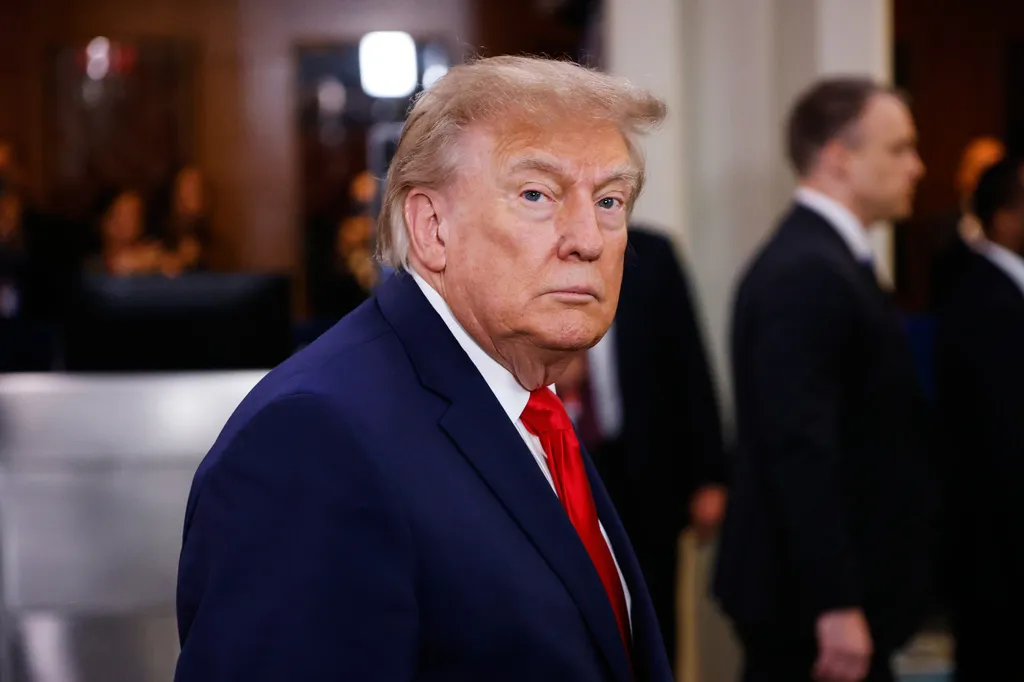
President Donald Trump declared that the United States will continue racing toward becoming the undisputed global leader on the emergent technology.
Affirmation of U.S. Global Leadership in AI During his address to the United Nations General Assembly, President Donald Trump unequivocally stated his vision for the United States to become the unrivaled global leader in artificial intelligence. This commitment underscores his administration's strategic focus on technological supremacy and innovation, positioning America at the forefront of this critical emergent field. Trump's steadfast conviction in this objective is a recurring theme in his public remarks on the subject, signaling a long-term goal for the nation's technological policy and competitive stance on the world stage. Trump's Approach to AI Development and Regulation President Trump has consistently advocated for the advancement of artificial intelligence throughout his second term. His policy approach includes specific initiatives such as the 'Ratepayer Protection Pledge,' which aims to ensure that AI companies contribute directly to the development of necessary infrastructure. Concurrently, Trump has vehemently rejected any attempts to introduce regulatory frameworks for the AI industry. This stance indicates a preference for an environment of unrestricted innovation, believing that minimal government intervention will accelerate technological progress and maintain the U.S.'s competitive edge, despite increasing public and international calls for oversight. Artificial Intelligence as a Key Election Concern Artificial intelligence has emerged as a significant electoral issue, garnering substantial attention from voters as the 2026 midterm elections approach. The societal implications, economic impacts, and ethical considerations surrounding AI are increasingly shaping public discourse. Trump's clear position on fostering AI growth without regulation is likely to be a central point of discussion and debate among candidates, reflecting the electorate's evolving concerns and the critical role technology plays in national policy and the future economy. This highlights the growing importance of technological policy in shaping political campaigns and voter decisions.
Affirmation of U.S. Global Leadership in AI
During his address to the United Nations General Assembly, President Donald Trump unequivocally stated his vision for the United States to become the unrivaled global leader in artificial intelligence. This commitment underscores his administration's strategic focus on technological supremacy and innovation, positioning America at the forefront of this critical emergent field. Trump's steadfast conviction in this objective is a recurring theme in his public remarks on the subject, signaling a long-term goal for the nation's technological policy and competitive stance on the world stage.
Trump's Approach to AI Development and Regulation
President Trump has consistently advocated for the advancement of artificial intelligence throughout his second term. His policy approach includes specific initiatives such as the 'Ratepayer Protection Pledge,' which aims to ensure that AI companies contribute directly to the development of necessary infrastructure. Concurrently, Trump has vehemently rejected any attempts to introduce regulatory frameworks for the AI industry. This stance indicates a preference for an environment of unrestricted innovation, believing that minimal government intervention will accelerate technological progress and maintain the U.S.'s competitive edge, despite increasing public and international calls for oversight.
Artificial Intelligence as a Key Election Concern
Artificial intelligence has emerged as a significant electoral issue, garnering substantial attention from voters as the 2026 midterm elections approach. The societal implications, economic impacts, and ethical considerations surrounding AI are increasingly shaping public discourse. Trump's clear position on fostering AI growth without regulation is likely to be a central point of discussion and debate among candidates, reflecting the electorate's evolving concerns and the critical role technology plays in national policy and the future economy. This highlights the growing importance of technological policy in shaping political campaigns and voter decisions.