Quick Buzz Feed

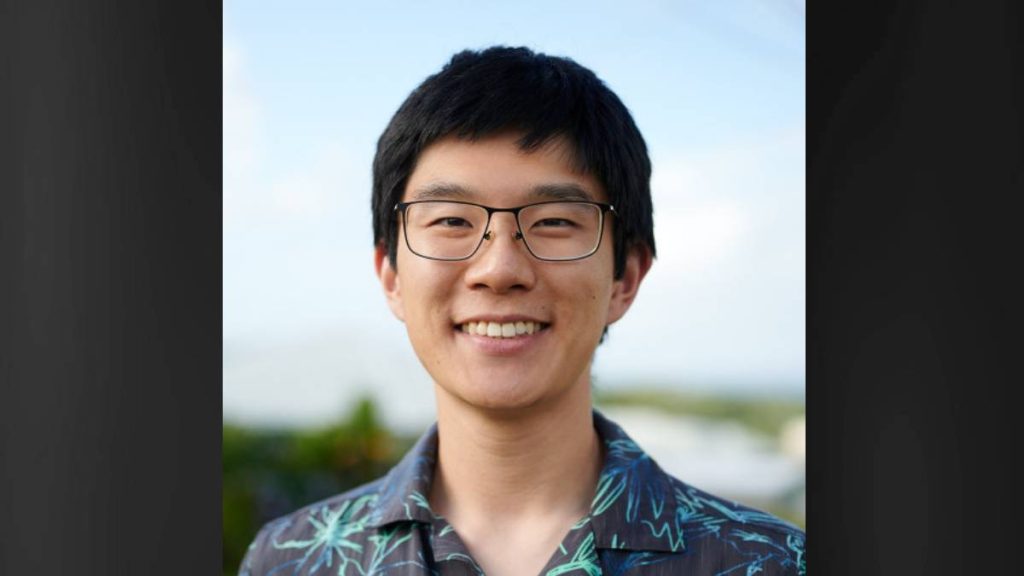
University of Hawaiʻi at Hilo assistant professor Winston Wu has been chosen as a national ambassador to advance AI education through a National Science Foundation initiative for the next year.
Dr. Winston Wu, an esteemed Assistant Professor at the University of Hawaiʻi at Hilo, has recently achieved national recognition by being selected as one of 25 distinguished ambassadors in a groundbreaking initiative to propel artificial intelligence (AI) education forward. This significant appointment places him in the inaugural cohort of a program designed to shape the future of AI learning across academic institutions. His role as a national ambassador underscores the University of Hawaiʻi at Hilo's growing influence and expertise in cutting-edge technological fields, particularly in AI. The fellowship is a testament to his individual contributions and the broader commitment to fostering innovation and excellence in higher education within the realm of AI development and application. This initiative is vital for creating a cohesive and advanced national landscape for AI scholarship and practical implementation.
In his capacity as a fellow, Dr. Wu will actively engage with the National Science Foundation’s (NSF) National Artificial Intelligence Research Resource (NAIRR) Pilot Classroom Expansion AI EDU Research Coordination Network. This comprehensive national initiative is strategically designed to cultivate a robust and sustainable community of practice, dedicated entirely to advancing the methodologies and accessibility of AI education. A core objective of the Research Coordination Network is to unite faculty members from a diverse spectrum of higher education institutions, thereby fostering invaluable collaboration, facilitating the efficient sharing of crucial resources, and developing universally applicable best practices for seamlessly integrating AI education into various academic curricula. Dr. Wu's direct responsibilities encompass the piloting and adaptation of new courses leveraging NAIRR Pilot Classroom resources, providing essential support to faculty nationwide as they incorporate these innovative materials into their teaching, and playing a key role in influencing the strategic direction and long-term vision of the entire Research Coordination Network. This multi-faceted involvement aims to strengthen the educational pipeline for future AI professionals and researchers.
Dr. Winston Wu's primary research endeavors are focused on the intricate fields of natural language processing (NLP) and machine learning, with a distinct and impactful application towards supporting language revitalization and educational efforts within local communities. His innovative work is particularly vital for developing sophisticated methods tailored for multilingual and low-resource language applications, addressing significant technological gaps in preserving and promoting linguistic diversity. Within the academic environment of the University of Hawaiʻi at Hilo, Dr. Wu is a dedicated educator, teaching a wide spectrum of computer science courses. These range from fundamental introductory programming concepts, designed for new students, to highly specialized and advanced undergraduate courses that delve into the complexities of natural language processing and deep learning. Furthermore, demonstrating his commitment to student development and excellence, he also serves as a coach for the university's competitive programming teams, mentoring students to excel in algorithmic problem-solving and coding challenges. His combined research and teaching portfolio highlights his significant impact on both the academic and local community.
Dr. Wu's impressive academic journey began at the University of Texas at Austin, where he successfully completed undergraduate degrees in two distinct yet intellectually stimulating fields: computer science and Latin. He subsequently advanced his studies by obtaining a Ph.D. in computer science from Johns Hopkins University, solidifying his expertise in the computational sciences. Following his doctoral work, he pursued a postdoctoral fellowship at the University of Michigan, further refining his research skills and knowledge base. His current, impactful national artificial intelligence research fellowship is set to run for a duration of one year, specifically from March 2026 through February 2027. During this crucial period, he is anticipated to contribute significantly to national dialogues and advancements in AI, utilizing his extensive background to bridge theoretical knowledge with practical educational strategies.