Quick Buzz Feed

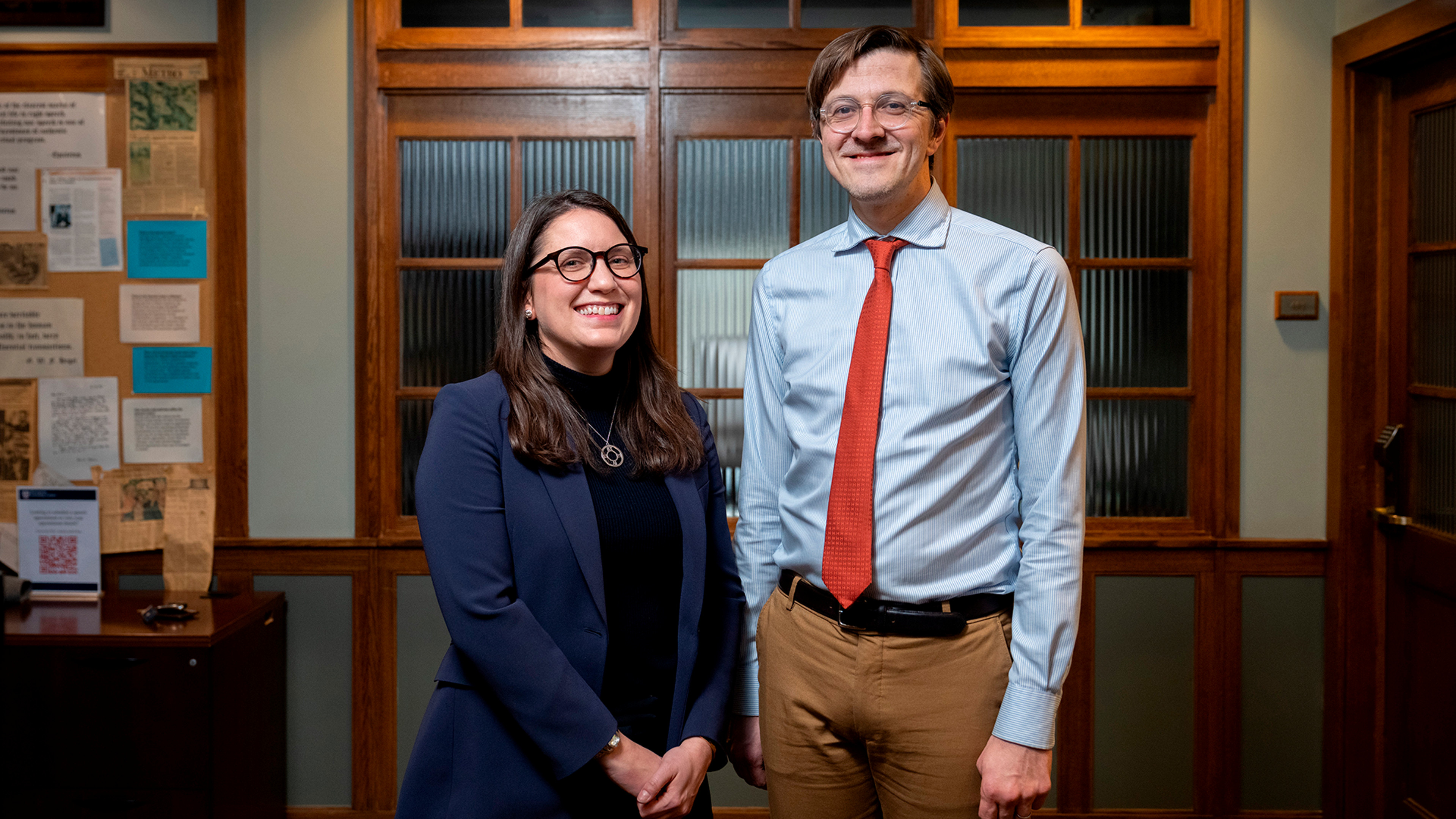
University of Richmond professors Taylor Arnold and Lauren Tilton have received a $250,000 grant to support their research, focusing on developing AI models to analyze film and television.
University of Richmond professors Taylor Arnold and Lauren Tilton have secured a significant $250,000 grant, part of a larger $750,000 award from Schmidt Sciences. This funding will facilitate a collaborative research project with colleagues from UC Berkeley and Bowdoin College to advance AI capabilities.
Over the next two years, the project aims to create new AI models capable of analyzing film and television content beyond basic image recognition. These models will focus on nuanced aspects such as camera movement, narrative structures, and how editing and dialogue contribute to meaning. The Richmond team plans to apply these sophisticated AI tools to track evolutionary patterns across thirty long-running television series, offering insights into the dynamics of visual media.
Professor Lauren Tilton highlights the dual significance of this research, emphasizing its contribution to both the humanities and artificial intelligence. The project seeks to enhance AI's ability to not only identify objects in moving images but also to analyze complex patterns, marking a crucial step forward for various scholarly communities engaged with digital media. This builds upon Tilton and Arnold's previous successful research in digital humanities, supported by prestigious grants from the Mellon Foundation and the National Endowment for the Humanities.
Dr. Taylor Arnold serves as a Professor of Data Science and Statistics and is the Interdisciplinary Program Coordinator for Data Science and Statistics at the University of Richmond. His areas of expertise span Data Science, Digital Humanities, and Linguistics, making him a key contributor to the grant's objective of leveraging AI for complex textual and visual analysis in academic contexts.
Dr. Lauren Craig Tilton is a Professor of Digital Humanities and the E. Claiborne Robins Professor of Liberal Arts. She also directs UR’s Center for Liberal Arts and AI and is a Data Science Advisory Board Member. Her specialties include Computational/Digital Humanities, Visual Culture, Community Media, and the Politics of Representation, positioning her as a leader in applying machine learning to historical and cultural studies of media.