Quick Buzz Feed

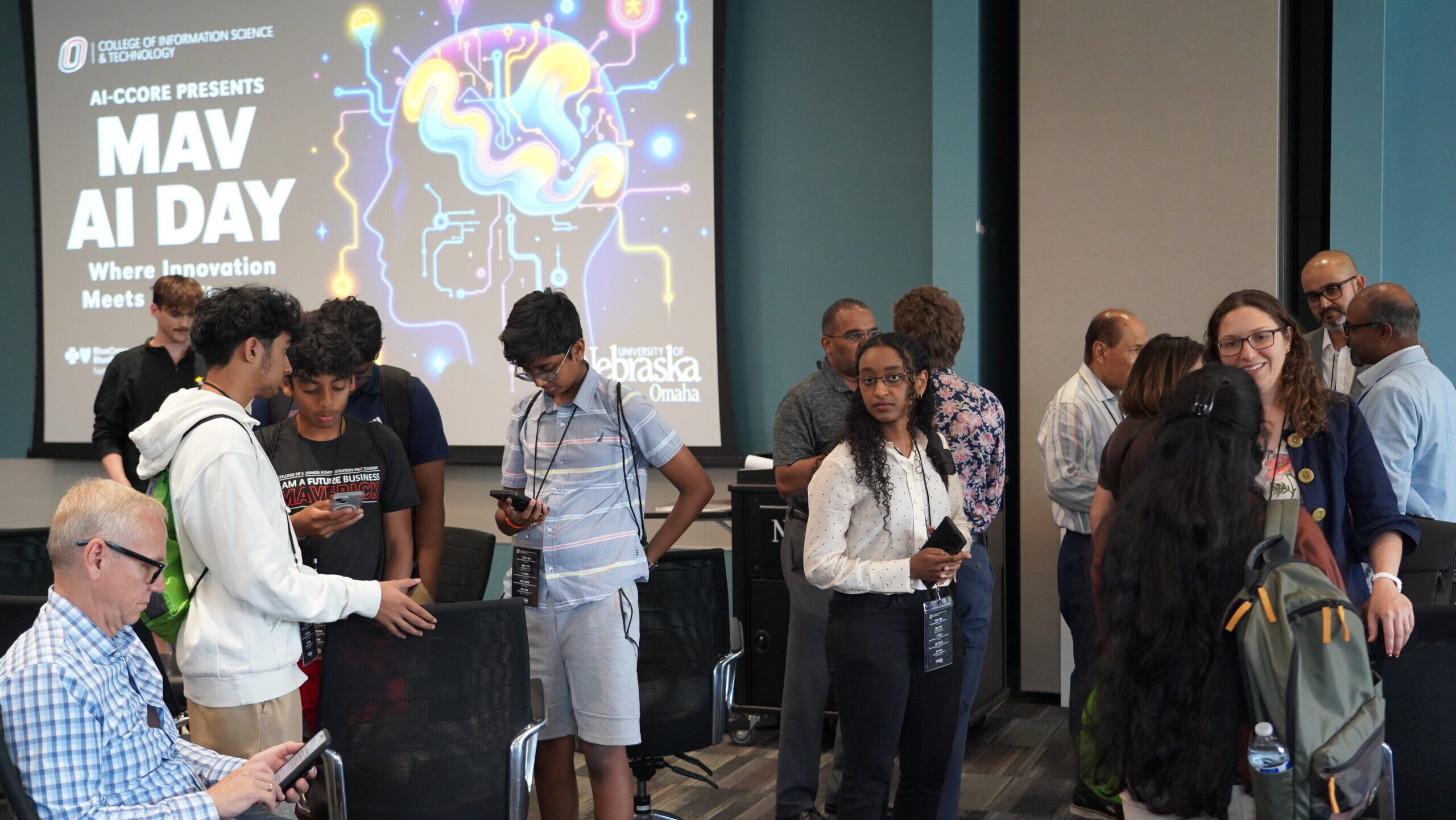
The University of Nebraska at Omaha began its AI-CCORE initiative with the goals of spreading AI literacy, pairing students with career opportunities and helping local businesses, nonprofits and startups embrace the tech to fit their needs. Offerings include community-facing classes, camps, events and a new exhibit open to the public.
In an era marked by rapid advancements and evolving complexities in artificial intelligence, the University of Nebraska at Omaha (UNO) has positioned itself as a crucial resource through its AI-CCORE initiative. Launched with a grant from the Weitz Innovation and Excellence Fund, AI-CCORE stands for Artificial Intelligence Center for Collaborative Outreach, Research and Education. Its primary objective is to equip individuals and organizations across Nebraska with current knowledge and practical skills in AI. The initiative aims to enhance AI literacy within communities, foster career opportunities for students, and assist local businesses, nonprofits, and startups in integrating this transformative technology into their operations. AI-CCORE offers a diverse range of programs, including specialized bootcamps designed to train professionals on the latest technological advancements and software prototyping. It also provides master classes to establish a foundational understanding of AI concepts. Furthermore, a dedicated studio targets high school students and young adults, offering early exposure to current AI concepts and practical skillsets. Martha Garcia-Murillo, Dean of the UNO College of Information Science and Technology, emphasizes that this blend of AI education and entrepreneurial thinking is crucial for opening new career pathways for students, enabling them to meet future workforce demands or even launch their own AI-driven ventures as industries adapt to the technology.
To directly connect with the wider community and showcase its initiatives, UNO hosted its inaugural Mav AI Day earlier this month. This event served as a platform to highlight UNO’s various AI programs, strategic partnerships, and ongoing discussions surrounding the multifaceted impacts of artificial intelligence. A significant part of Mav AI Day included a ribbon-cutting ceremony for a new AI exhibit, which is now open to the public at the Barbara Weitz Community Engagement Center. This exhibit is envisioned as an interactive space where people can comfortably ask questions about AI and gain a clearer understanding of its implications across diverse industries and educational sectors. The organizers plan to host future Mav AI Days, reinforcing UNO’s commitment to continuous community engagement and education in AI. The ultimate aspiration for this public exhibit is to expand its reach, with a long-term goal of establishing a presence at the Kiewit Luminarium, thereby broadening public access and fostering even greater interest in artificial intelligence throughout the state.
AI-CCORE is actively fostering meaningful collaborations between academia and industry. During Mav AI Day, several prominent entities such as Blue Cross and Blue Shield of Nebraska, Farm Credit Services of America, and SPARK CDI shared insights into their partnerships with UNO. These collaborations exemplify joint efforts to develop practical, AI-powered tools tailored to their specific operational needs. Garcia-Murillo notes that these partnerships often originate when businesses and nonprofits engage with UNO through programs like AI-CCORE, leading to an interest in leveraging the university's expertise for specific projects. Vishva Prasanth Srinivasan, an AI engineer and member of the AI-CCORE team, highlights the invaluable opportunities these collaborations provide for students. Many students undertake projects for companies as part of their capstone requirements, gaining real-world experience and establishing clear career pipelines. Srinivasan affirms that the AI-CCORE team is equipped to support startups and established organizations alike, offering assistance with ideation, solution development, and strategizing for successful launch. He emphasizes UNO's commitment as an educational institution to stay at the cutting edge of AI trends, moving at a speed equal to or faster than the technology's current growth. AI-CCORE welcomes engagement from any industry or project that believes AI could be a beneficial tool, encouraging interested parties to explore potential fits.
Beyond the AI-CCORE initiative, the University of Nebraska at Omaha demonstrates a comprehensive commitment to advancing AI education and cybersecurity across the state. UNO has taken significant steps to democratize access to and understanding of AI, notably by launching Nebraska’s first AI degree program. This program is a testament to the university's dedication to developing a skilled workforce capable of innovating within the AI landscape. Recognizing the growing threat of AI-enhanced cyberattacks, UNO has also established the Nebraska Cyber MATRIX initiative. This program focuses on training students with modern cybersecurity skills, directly addressing the evolving challenges in digital security. Furthermore, UNO is extending its reach to underserved areas through the new NA’WI initiative, designed to introduce AI concepts and applications to rural communities, ensuring broader participation in the technological revolution. These efforts are complemented by events like the OMA x AI conference, which serves as a key forum for discussing all aspects of artificial intelligence. The next OMA x AI conference is scheduled for June 30, with ticket sales concluding on June 28. In a move to make AI more accessible and understandable, Garcia-Murillo also mentioned that the AI exhibit on UNO’s campus is open to the public on Fridays, with plans to eventually open a larger exhibit at the Kiewit Luminarium, further solidifying UNO’s role as a leader in AI education and innovation.