Quick Buzz Feed

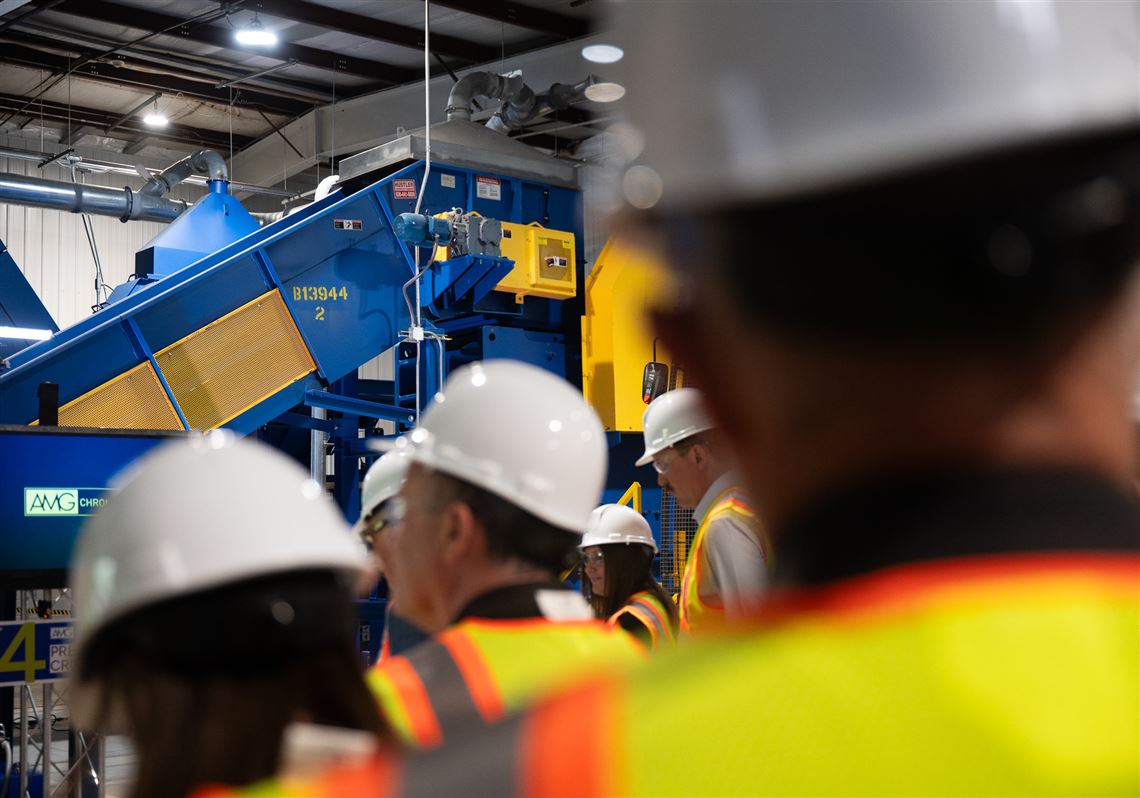
Shelfmark, a Pittsburgh company leveraging artificial intelligence to accelerate manufacturing lines by detecting anomalies in real time, has announced significant growth following a new $3.5 million funding round. The company's innovative 'physical AI' technology is designed to make production more autonomous, improve efficiency, and reduce waste by understanding cause-and-effect relationships on the factory floor, aiming to perform tasks beyond consistent human capability.
Shelfmark, a Pittsburgh-based artificial intelligence company, has successfully completed a new funding round, raising $3.5 million. This seed round, led by Armory Square Ventures and supported by Grand Ventures, Hyde Park Angels, Argon Ventures, and Cultivation Capital, brings the company's total capital raised to approximately $5 million. Co-founder and CEO Pat O'Donnell articulated that Shelfmark was developed in Pittsburgh, in collaboration with factory operators and engineers, to infuse manufacturing lines with the necessary intelligence for increased autonomy. O'Donnell emphasized that the technology's purpose is not to replace human labor but to perform tasks that humans cannot execute consistently at high production speeds, effectively catching problems as they emerge and providing teams with the insights needed to prevent future issues, thereby speeding up manufacturing processes by detecting real-time anomalies.
Shelfmark's core focus is on advancing autonomy within what it identifies as one of manufacturing's most frequently overlooked sectors: the high-speed lines responsible for producing materials on reels, rolls, and continuous webs. These encompass a diverse range of products, including apparel graphics, various paper products, flooring materials, and coiled metals. The inherent speed of these lines, coupled with frequent specification adjustments during production, presents significant challenges for real-time defect detection. The inability to identify defects until an entire batch has been produced is costly for manufacturers. To combat this, Shelfmark integrates 'physical AI,' which is a sophisticated combination of AI software with physical systems capable of sensing and adapting to their surrounding environment. This enables the technology not only to identify defects but also to continuously collect data, refining its automation capabilities over time.
The effectiveness of Shelfmark's system is attributed to its use of industrial cameras, spatial sensing, and proprietary deep-learning vision models. These components allow the company to achieve an impressive 99.5% defect-detection accuracy in customer deployments, which has reportedly led to a halving of inspection labor costs and generated returns up to seven times greater than those achieved through manual inspection methods. A key differentiating factor is Shelfmark's implementation of 'causal AI.' Unlike traditional AI, which typically identifies statistical correlations, causal AI models cause-and-effect relationships. This advanced understanding extends beyond just the machinery, delving into the broader atmosphere of the production space. A notable example cited involves a shop floor deployment where the AI detected subtle fluctuations in ambient humidity. Following the implementation of humidity controls based on these AI insights, the manufacturer experienced a 50% reduction in its defect rate, illustrating the profound impact of understanding underlying causes.
Shelfmark has already collaborated with 40 manufacturing facilities, where its innovative technology has contributed to a substantial reduction in waste, achieving up to 90% savings. Anthony Santaro, Vice President at Armory Square Ventures, praised Shelfmark for its ability to combine deep technical expertise with tangible, measurable results for manufacturers. He highlighted that the company is effectively addressing a large yet underserved market with technology specifically designed to integrate seamlessly into actual factory operations. Established in 2022, Shelfmark plans to expand its team in Pittsburgh, intending to hire approximately half a dozen new employees over the next 18 months. O'Donnell reiterated the company's strong desire to foster continued growth within Pittsburgh, expressing no plans to establish additional offices elsewhere and emphasizing the ongoing need to recruit talented individuals for these upcoming roles in the city.