Quick Buzz Feed

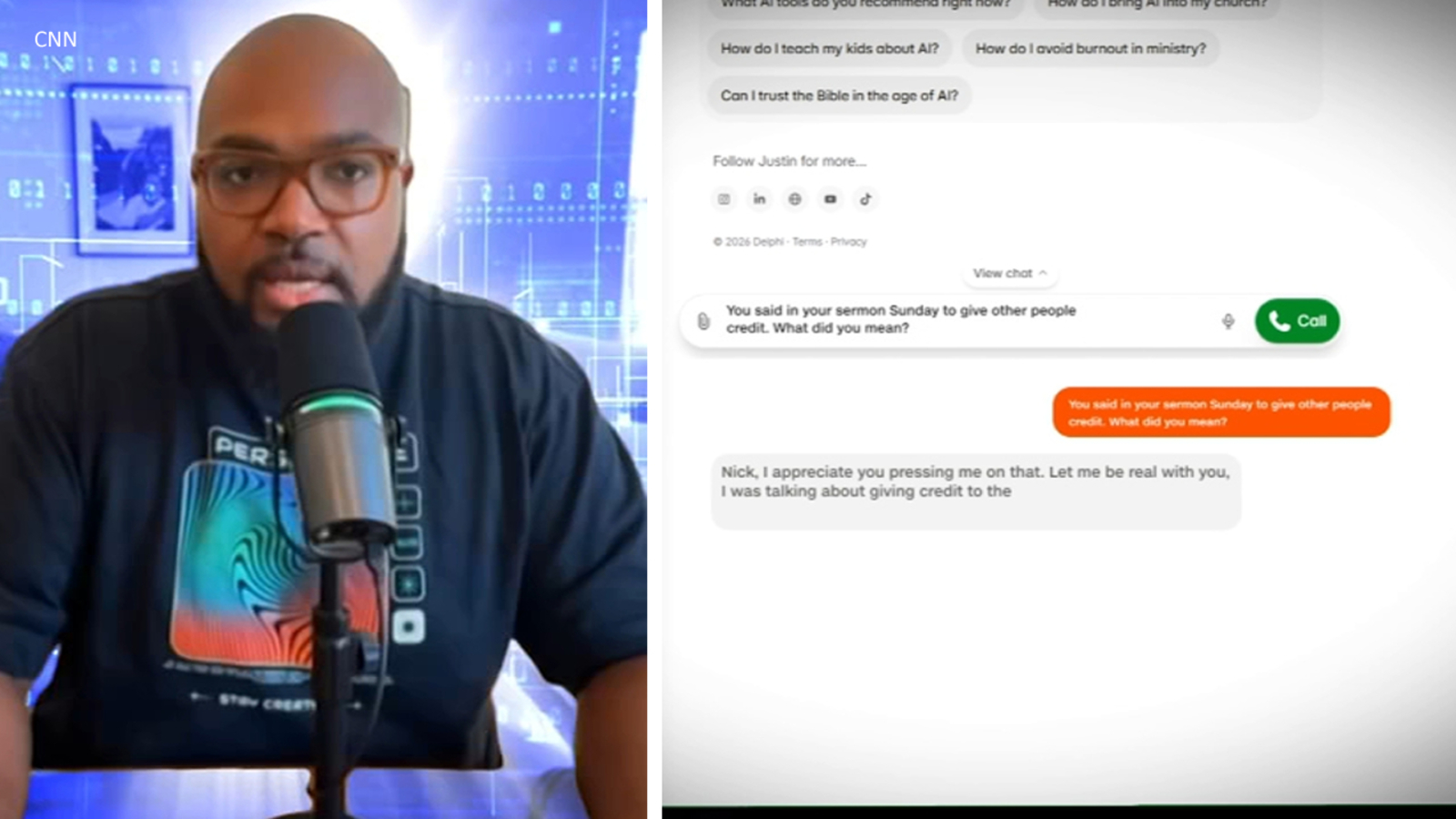
The artificial intelligence revolution is just about everywhere these days. Now a Vallejo, California pastor has turned to artificial intelligence to help his flock. He created an AI version of himself that followers can turn to, providing spiritual guidance and support when the real pastor is unavailable.
Pastor Justin Lester of Friendship Missionary Baptist Church in Vallejo, California, has embraced artificial intelligence by creating a digital doppelganger of himself. This AI pastor is designed to minister to his congregation, stepping in when the human pastor is physically unavailable. The initiative reflects a growing trend of AI integration into various sectors, now extending into the religious realm to offer continuous spiritual support and engagement.
Church members, including technical director Steve Smedley and Rev. Stephany Baker, express enthusiasm for the AI pastor. They highlight its utility for immediate answers to questions that might arise outside of regular pastoral hours. Breanah Drake, the event coordinator, notes that the AI provides a comfortable space to ask questions one might be too embarrassed to pose directly to the pastor, fostering a more accessible and judgment-free environment for spiritual inquiry.
Pastor Lester explains that his AI clone is trained on a vast amount of his personal content, including his YouTube videos, TikToks, Instagram posts, every sermon he has ever preached, and even books he has written. This comprehensive dataset allows the AI to develop responses consistent with his theological perspective and communication style. Furthermore, the AI pastor undergoes daily updates, ensuring its knowledge base evolves with the real pastor's ongoing spiritual development and teachings.
The AI pastor's ability to engage in seemingly personal conversations has led to some interesting reactions. A CNN reporter, Nick Watt, tests the AI by expressing feelings of loneliness, to which the AI responds with scripture-based advice on seeking connection. Pastor Lester acknowledges that some interactions can be 'creepy,' recalling instances where parishioners genuinely believed they had conversed with him. This prompted him to disable the video component, preferring to keep the interaction audio-only for now, though he is open to reintroducing video if technology improves.
Rev. Lester sees himself as an innovator, not just with his personal AI but also through initiatives like 'pastor GPT,' which assists other pastors in sermon writing. He emphasizes that AI doesn't replace human connection but rather enhances it by handling mundane administrative tasks like emails. This frees up his time, allowing him to be a better father, husband, and pastor, enabling him to dedicate more quality time to essential human interactions, such as longer hospital visits.
Despite the advancements, Pastor Lester firmly states that AI cannot replicate human emotions or replace the essence of human interaction. He reassures that the AI is not designed to replace him or lead to virtual, human-less churches. Instead, Rev. Baker views it as an 'expansion of the church,' fostering more love and humanity. The AI pastor also operates with 'guard rails,' restricting its conversational scope to topics the real pastor would address and directing users to the human pastor for serious issues like suicide or abuse.