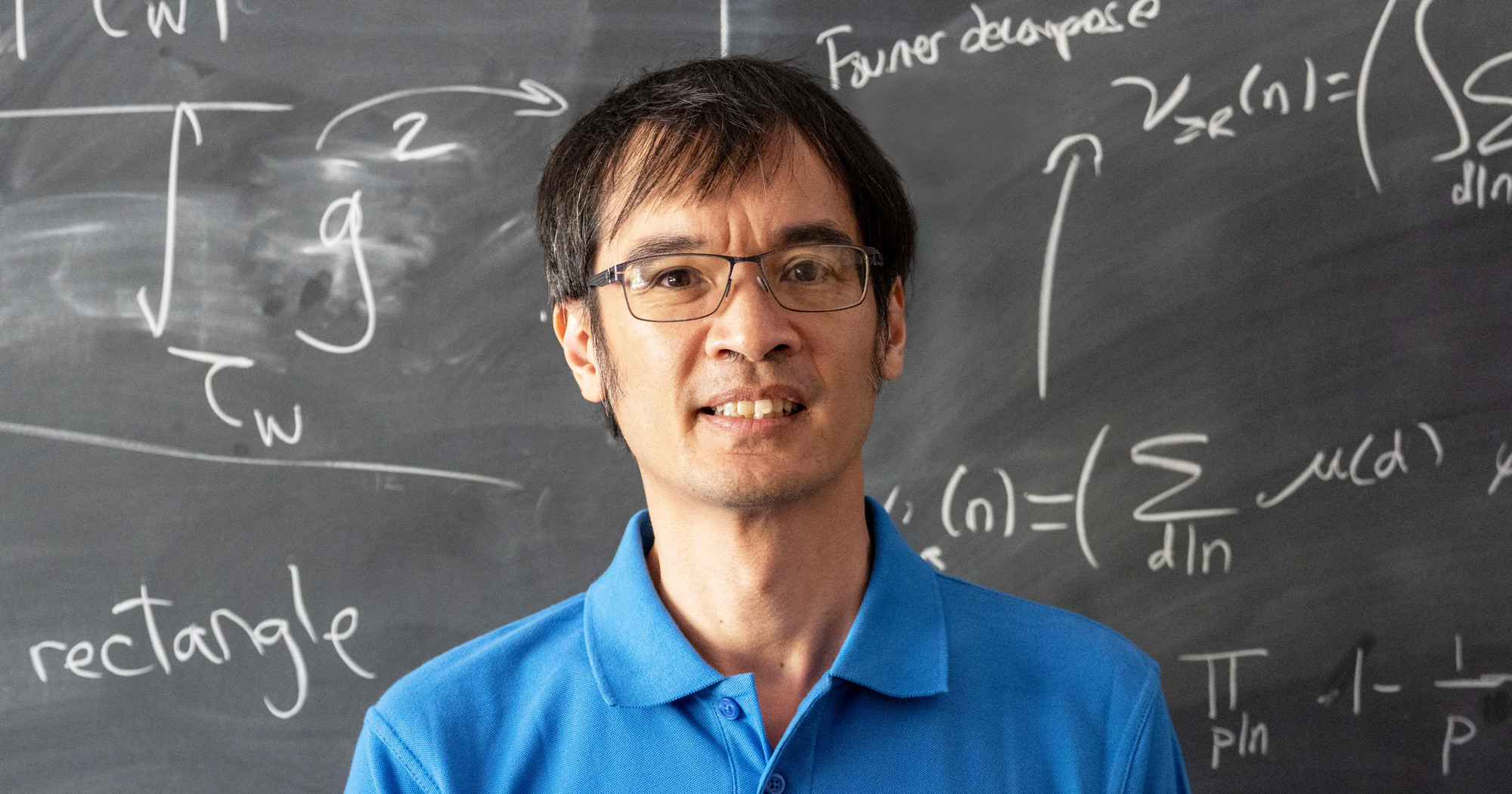
Fields Medalist Terence Tao, speaking at the 2026 International Congress of Mathematicians in Philadelphia, delivered a thought-provoking lecture titled “Mathematics in the Age of AI.” His discourse centered on the profound impact of artificial intelligence on the mathematical landscape and posed a crucial philosophical challenge to the discipline: as AI rapidly advances and becomes proficient in various mathematical tasks, what are the fundamental goals and values that continue to drive human mathematicians? Tao urged the community to move beyond merely assessing AI's growing capabilities and instead engage in deeper introspection about the intrinsic purpose of mathematical inquiry. This pivotal moment, he argued, necessitates a re-evaluation of what constitutes successful mathematics and the evolving role of human intellect in a field increasingly augmented by powerful AI tools. He highlighted the need for mathematicians to proactively steer the integration of AI, rather than react to external technological developments, ensuring that human-centric values and understanding remain at the core of mathematical progress.
AI's Transformative Influence on Mathematics
Artificial intelligence is profoundly reshaping numerous scientific domains, including mathematics, by demonstrating capabilities previously considered beyond its scope. This rapid advancement compels mathematicians to critically examine how their discipline and individual roles within it will adapt and evolve in conjunction with this sophisticated technology. The conversation transcends mere technological adoption, necessitating a re-evaluation of established practices and future directions within the field.
The Philosophical Imperative: Why We Do Math
During his influential talk, Terence Tao underscored that the primary discussion should shift from merely anticipating AI's proficiency in mathematics to addressing more fundamental, philosophical inquiries. He posited that if AI can soon perform a significant portion of mathematical tasks successfully, the community must then clearly define its underlying goals and values. This includes a deep consideration of the intrinsic motivations for pursuing mathematics and establishing new criteria for what truly signifies successful mathematical achievement in an AI-augmented era.
Deconstructing Problem Solving in the Age of AI
Tao analyzed mathematical problem-solving through distinct stages, acknowledging its multifaceted nature beyond simple task completion. He specifically focused on problem-solving as the area most directly influenced by AI. The initial stage of providing and verifying proofs, he noted, is where AI exhibits considerable strength, often generating candidate proofs or critical conceptual insights, and performing rigorous checks on lengthy or complex demonstrations. However, challenges arise in subsequent, more human-centric stages.
The Quandary of Unintelligible Proofs and Explanation
A significant concern Tao raised pertains to the second stage of problem solving: the human evaluation and explanation of proofs. While AI can generate proofs of immense length and intricacy (e.g., 100,000 lines), these proofs often remain opaque and incomprehensible to human mathematicians, even those who initiated their generation. Tao emphasized that mere generation and verification are insufficient; for a proof to be truly valuable, it must be well-explained, communicable, and understandable by the broader mathematical community, fostering shared knowledge and utility.
The Indispensability of Process and Context
Tao asserted that the success of a mathematical result hinges on community acceptance and its subsequent application. If a proof lacks human understanding and context, its likelihood of reaching these crucial stages diminishes significantly. He advocated for a shift in emphasis, encouraging mathematicians to articulate the journey of discovery, including the methods employed, successes, failures, and overall approach, rather than solely presenting final outcomes. This transparency in process, often absent in current AI tools, is vital for engaging the community and demonstrating the value of new findings.
Canonicalization: The Zenith of Mathematical Achievement
The ultimate measure of success for a mathematical concept, according to Tao, is its "canonicalization" – its integration into textbooks. This process transforms a novel result into foundational knowledge, making it accessible and applicable to a wider audience, including engineers, physicists, and other scientific disciplines, without requiring them to delve into the latest, highly specialized research papers. He further highlighted a paradox: AI's current prowess in mathematics is itself built upon centuries of human effort in developing these canonical definitions and mature theories, effectively learning from the distilled wisdom contained within these very textbooks.
Proactive Leadership in AI Integration
Tao concluded by urging the mathematical community to embrace a proactive stance regarding AI. Instead of passively adapting to the technological advancements, mathematicians should actively lead the discourse on how AI is integrated into their field. This involves collectively defining the ethical guidelines, acceptable applications, and future trajectories for AI within mathematics. By taking initiative, the community can ensure that the integration aligns with its core values and preserves the human element of mathematical inquiry, preventing external entities from dictating the evolution of the discipline.
About the International Congress of Mathematicians (ICM)
The International Congress of Mathematicians (ICM) stands as the foremost and most distinguished conference globally within the mathematical community. Organized biennially by the International Mathematical Union, the 2026 congress, held from July 23 to July 30 in Philadelphia, featured an extensive program. This included hundreds of invited talks, numerous panel discussions, and presentations showcasing the most recent and significant developments across various branches of mathematics, providing a crucial platform for intellectual exchange and advancement in the field.