Quick Buzz Feed

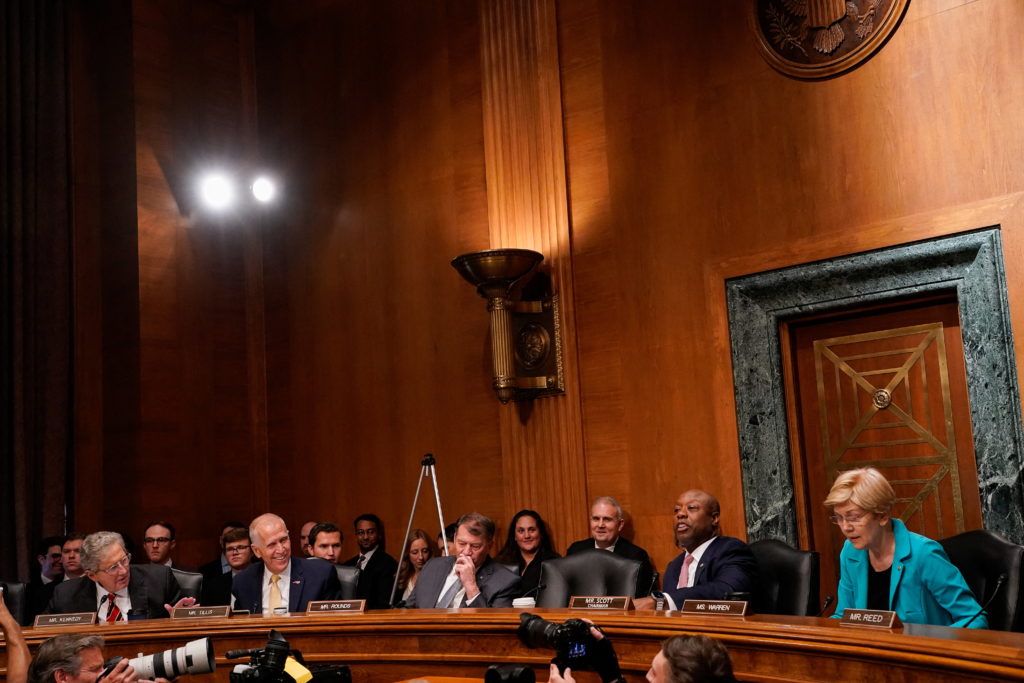
The Senate Banking, Housing and Urban Affairs Committee is holding a hearing Thursday on artificial intelligence, titled "AI and the American Dream: Promoting Innovation, Affordability, and American Dominance."
The Senate Banking, Housing and Urban Affairs Committee convened a hearing titled "AI and the American Dream: Promoting Innovation, Affordability, and American Dominance." This session aims to delve into the multifaceted implications of artificial intelligence on the American economy and workforce. The discussion is expected to cover how AI can be leveraged for innovation and affordability, while also ensuring American leadership in this rapidly evolving technological sector. The committee's focus highlights a growing governmental interest in understanding and shaping the future of AI's integration into society, particularly concerning its economic ramifications and the balance between fostering innovation and mitigating potential downsides for the populace.
Leading AI companies, Anthropic and OpenAI, have publicly acknowledged the potential for significant job displacement due to artificial intelligence and are advocating for proactive measures. Anthropic announced a substantial initial investment of $200 million to fund research into AI's impact on jobs and the broader economy, signaling a commitment to understanding and cushioning the technology's disruptive effects. Concurrently, OpenAI CEO Sam Altman has engaged with political figures like Sen. Bernie Sanders to explore concepts such as a public wealth fund. This fund would involve the public taking an ownership stake in AI companies, with the aim of widely sharing the economic gains generated by AI. Furthermore, President Donald Trump indicated plans to meet with executives from prominent AI firms to discuss strategies for the industry to 'give back' to the public, potentially making the public 'very rich.' These initiatives underscore a burgeoning recognition within the AI sector that the economic benefits of this powerful technology must be equitably distributed to prevent widespread social and financial instability.
Dario Amodei, CEO and co-founder of Anthropic, elaborated on the company's detailed economic policy framework designed to address potential job displacement caused by AI. Amodei stressed the importance of anticipating and adapting to these disruptions, which he believes could be more profound and prolonged than those from previous technological shifts. The framework proposes three levels of governmental response, correlating with national unemployment rates reaching 5%, 10%, and an 'unprecedented' level. Key policy suggestions include enhancing data collection to accurately track AI-driven job displacement, implementing pro-employment policies to slow or reduce these disruptions, and establishing mechanisms like universal basic income (UBI) for scenarios where labor demand is significantly reduced. Amodei suggested that such UBI programs could be financed through taxes levied on 'relevant companies' or by increasing the capital gains tax, indicating a shift towards novel economic strategies to manage the societal impact of advanced AI.
Beyond economic concerns, Anthropic's proposals also laid out a robust framework for managing the safety and security risks associated with advanced AI models. The company advocates for a regulatory approach that mirrors the stringent standards of the Federal Aviation Administration (FAA) for aircraft. This would entail mandatory technical testing and auditing for AI models before their public release, ensuring they meet high safety thresholds. Amodei emphasized that AI, much like aircraft, automobiles, and pharmaceuticals, is a powerful technology capable of causing significant harm if not properly designed or operated. Therefore, the proposals suggest that the government should possess the authority to 'block or deter' the deployment of AI models that pose 'significant risk of catastrophic harms.' This call for rigorous oversight aligns with recent governmental actions, such as President Trump's executive order on AI oversight, which established a framework for vetting national security risks of advanced AI systems. The overarching goal is to ensure that AI development proceeds responsibly, with robust safeguards in place to protect society from potential dangers.