Quick Buzz Feed

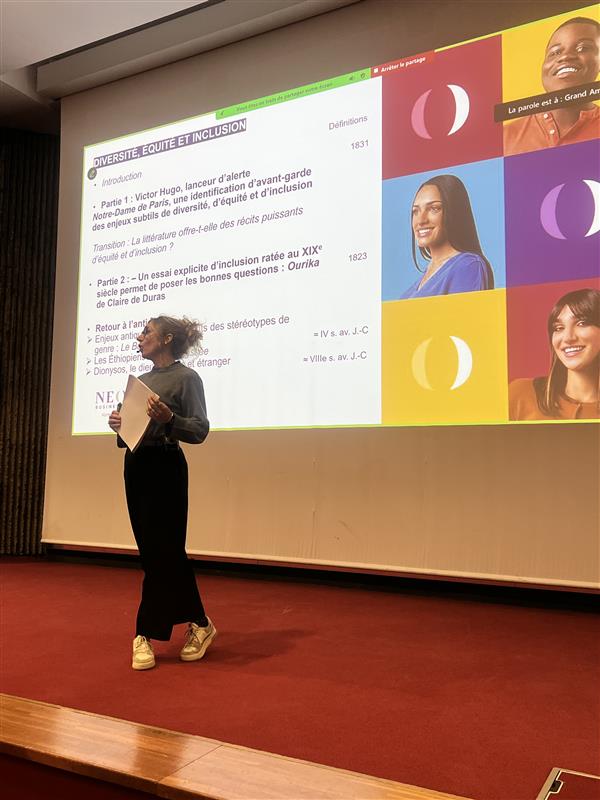
NEOMA Business School blends humanities and technology, using classic works of literature to train future managers.
NEOMA Business School has positioned itself as an early innovator in AI and digital transformation, developing virtual-reality business cases since 2016, launching a virtual campus in 2020, and training 8,000 students in generative AI by 2022. Alain Goudey, Associate Dean for Digital, oversees IT, web design, and a Learning Lab, demonstrating the school's comprehensive approach. Alongside technical training, NEOMA emphasizes human capacities like critical thinking, ethics, empathy, and metacognition, aiming to equip students to work both with and without AI, augmenting their value in an AI-driven world.
The 'Lessons from Major Literary Texts: Management, Business, and Leadership' course is a mandatory 15-core requirement for all first-year undergraduate business students at NEOMA. This bold move reflects the school's belief that students need to be strong in both humanities and AI. Professor Agathe Mezzadri-Guedj designed the course to use classics like 'Frankenstein' and 'The Hunchback of Notre Dame' as case studies for leadership, responsibility, power, and ethics, offering an immersive experience into complex human behavior that traditional case studies cannot provide. The goal is to teach students to think critically and understand context before relying on AI, ensuring AI sharpens, rather than substitutes, human thought.
First-year student William Carde, who previously studied mathematics and geopolitics, found new insights in Homer's 'Odyssey' when examining Ulysses through a management lens. The course challenges the traditional view of Ulysses as a hero, prompting students to question a leader who loses his entire crew but himself. Carde notes that this critical thinking helps him approach AI with caution, recognizing ChatGPT's tendency to affirm user ideas. The course encourages students to step back, consider downsides, and develop their own mindset, fostering a deeper appreciation for reading and independent thought in an era of instant AI results.
Ellen Simon, who studied humanities, appreciates how the NEOMA course connects classic literature to modern management challenges. She highlights the relevance of themes like openness, cultural awareness, and respect for diversity in today's global business environment. A key lesson for Simon is to view AI as a powerful tool requiring human guardrails, understanding both its potential and dangers. She draws a parallel between Mary Shelley's 'Frankenstein' and recent issues with AI chatbots like Grok, where technology, when unchecked by human responsibility and ethics, can lead to significant harm. The core message is that leaders must prevent themselves from becoming 'monsters' through unchecked ambition and a lack of accountability in the face of new technology.