Quick Buzz Feed

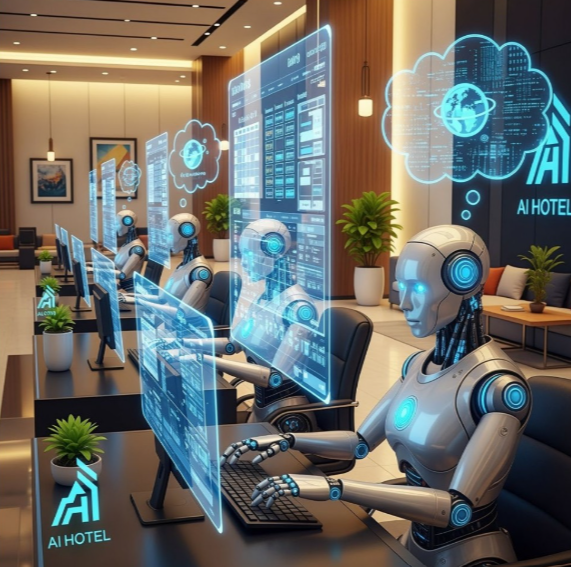
A study reveals how employees' awareness of artificial intelligence and robotics in the hospitality sector simultaneously enhances performance and increases stress, highlighting a dual psychological impact of technological change.
This section introduces the core finding that employees' awareness of AI and robotics (AIRA) triggers two concurrent psychological paths: growth and strain. On one hand, AIRA motivates active learning, leading to enhanced work performance. On the other hand, it heightens job insecurity, which subsequently increases work stress. This dual effect challenges simplistic views of technology's impact, portraying a more complex emotional reality of digital transformation where improvement and tension coexist.
The research employed a mixed-method approach, beginning with qualitative interviews in smart hotels. These interviews revealed both the efficiency gains from AI and employees' anxieties about job stability, shaping the study's conceptual model. The second stage involved a survey of 328 employees from 19 chain hotels, using structural equation modeling. Empirical results confirmed both pathways: AIRA positively predicted active learning and performance, as well as job insecurity and stress, underscoring that these enhancement and strain effects occur simultaneously and must be addressed in tandem.
The study further explored how proactive personality, characterized by initiative-taking, influences reactions to AI awareness. While proactive employees were more inclined to translate AIRA into active learning and development, they paradoxically experienced a stronger relationship between AIRA and job insecurity. This finding suggests that a proactive disposition does not automatically shield individuals from anxiety during technological shifts; instead, those who closely monitor industry changes may be particularly sensitive to potential technological competition.
The findings offer crucial practical implications for hospitality organizations. Implementing AI requires more than just technical upgrades; it necessitates addressing employees' perceptions and concerns. Organizations should avoid presenting AI as solely empowering, acknowledge genuine anxieties, and establish clear communication about evolving roles and reskilling opportunities. Implementing structured training programs can foster constructive development, while measures like open dialogue, mentoring, and participatory decision-making can help mitigate insecurity and stress, highlighting that digital transformation is fundamentally about managing people.
Academically, the study advances the discourse on technology and employment by defining AI awareness as a distinct psychological construct with simultaneous dual consequences. The mixed-method design enhances the rigor and richness of the findings. Crucially, the research shifts the focus from binary debates about whether AI is inherently good or bad for employees towards a more nuanced understanding that it drives both improvement and anxiety. Recognizing this duality is vital for crafting sustainable, human-centered innovation strategies within the tourism and hospitality sectors.