Quick Buzz Feed

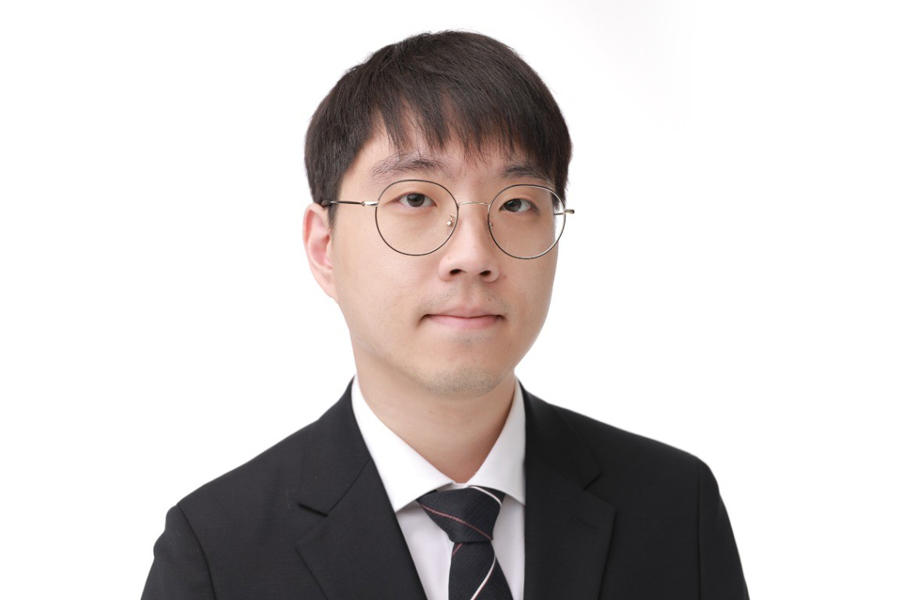
As a first-year medical student at NYITCOM, Sungjoon Hong worked on research that focuses on ways AI can be used to help comfort and heal the human body.
Sungjoon Hong, a student at the College of Osteopathic Medicine (NYITCOM), found his calling in medicine through a desire to help people in vulnerable situations, particularly in pain management and physical medicine and rehabilitation. This passion unexpectedly led him to explore research at the intersection of artificial intelligence (AI) and medical advancements. Initially unfamiliar with the mechanics of AI, Hong's interest was sparked by the potential of technology to map long-term recovery trends and enhance patients' quality of life within these fields.
A pivotal moment for Hong came during his first semester at NYITCOM when he connected with Associate Professor of Osteopathic Manipulative Medicine, Dr. Milan Toma. Dr. Toma, whose expertise includes AI-assisted medical diagnostics, maintained an open-door policy for research-interested students. Inspired by the rapidly evolving field of AI and a desire to lead his own project, Hong approached Dr. Toma. Toma recognized Hong's exceptional self-drive, initiative, and intellectual curiosity, noting that Hong, despite no prior machine learning experience, achieved three first-author publications in under a year under his mentorship.
Among his significant contributions, Hong's favorite paper, 'Deep learning based thermal foot segmentation with probability inversion post-processing for automated epidural block assessment,' published in Frontiers, details a novel application of AI. The research focuses on using a machine learning model to evaluate changes in foot temperature in women receiving epidurals during labor. Given that epidural blocks can have a failure rate of up to 12 percent, confirming their effectiveness is critical. Traditionally, this involves uncomfortable methods like pinpricks or ice cubes. Hong's method leverages the physiological response of blood vessel dilation and increased foot temperature post-epidural, capturing this data noninvasively with a thermal camera. The deep learning model, U-Net, acts as an automated assistant, instantly segmenting thermal images, identifying feet, and extracting mean temperatures in real-time. This translates a patient's subjective feelings into an objective, quantified visual map, reducing human error and patient discomfort in high-anxiety environments.
While enthusiastic about AI's potential, Sungjoon Hong also acknowledges its current limitations in medical settings. He stresses the importance of critically evaluating AI models to ascertain their true clinical utility, emphasizing that laboratory success does not automatically guarantee safety and effectiveness in a hospital environment. Hong's primary concern as a future physician is patient safety, leading him to assert that AI cannot yet be solely relied upon for patient diagnosis. However, he maintains a forward-looking perspective, believing that AI will inevitably become a standardized medical tool, much like a stethoscope, and therefore, it is imperative for healthcare professionals to embrace and learn to use it responsibly.