The Winter Garden Police Department is turning to artificial intelligence to help manage nonemergency calls and reduce wait times for residents.
New system aims to reduce wait times The Winter Garden Police Department recently introduced an AI-powered system called AVA, designed to assist with communications for nonemergency calls serving Winter Garden, Ocoee, Windermere, and Oakland. Instead of speaking directly with a dispatcher for nonemergency requests, callers will initially interact with an automated voice system. Captain Mike Mason with the Winter Garden Police Department explained, "Rather than talking to one of our dispatchers, you're going to be talking to an automated voice." He noted that the department commissioned this technology in February and has been working towards its implementation for several months, adding, "We're pretty excited about it." Technology already in use in Volusia County Winter Garden is not the first Florida law enforcement agency to adopt this advanced AI technology. Volusia County successfully introduced a similar AI-powered system last year, demonstrating its practical application in public services. The system is meticulously designed to ask callers all the typical questions dispatchers would normally ask to gather comprehensive information about nonemergency incidents. Brittany Yisrael, a communications shift commander in Volusia County, confirmed this, stating, "Every possible question that we would ask, AVA is asking that caller." During a demonstration, the AI system, AVA, was observed asking a caller for the address of a reported noise complaint, showcasing its functionality. Dispatchers can focus on emergencies Winter Garden police emphasize that the integration of this AI technology will significantly help to free up their human dispatchers. This allows the dispatchers to concentrate more effectively on crucial emergency calls and maintain vital radio communications with officers actively in the field. Captain Mason elaborated that dispatchers often contend with managing several critical responsibilities simultaneously, including handling a constant flow of incoming telephone calls and coordinating essential radio traffic. The implementation of AVA is expected to provide much-needed added support, which could help ease this considerable workload and enable dispatchers to allocate more focused attention to situations that unequivocally demand an immediate and human response. Callers can still reach a live dispatcher A key feature of the new AI system is that residents who become frustrated with the automated voice system or simply prefer speaking with a live person will retain the option to do so. Captain Mason assured that AVA is specifically designed to recognize cues indicating a caller's dissatisfaction or difficulty interacting with the system, prompting it to transfer the call to a human dispatcher. Furthermore, he clarified that the system incorporates a predefined process for routing callers to a live dispatcher in scenarios where the AI technology may not be functioning correctly. The overarching goal, according to the police department, is to enhance the efficiency of handling nonemergency calls while simultaneously ensuring that human dispatchers can dedicate their primary focus to urgent situations that require their immediate and direct attention.
New system aims to reduce wait times
The Winter Garden Police Department recently introduced an AI-powered system called AVA, designed to assist with communications for nonemergency calls serving Winter Garden, Ocoee, Windermere, and Oakland. Instead of speaking directly with a dispatcher for nonemergency requests, callers will initially interact with an automated voice system. Captain Mike Mason with the Winter Garden Police Department explained, "Rather than talking to one of our dispatchers, you're going to be talking to an automated voice." He noted that the department commissioned this technology in February and has been working towards its implementation for several months, adding, "We're pretty excited about it."
Technology already in use in Volusia County
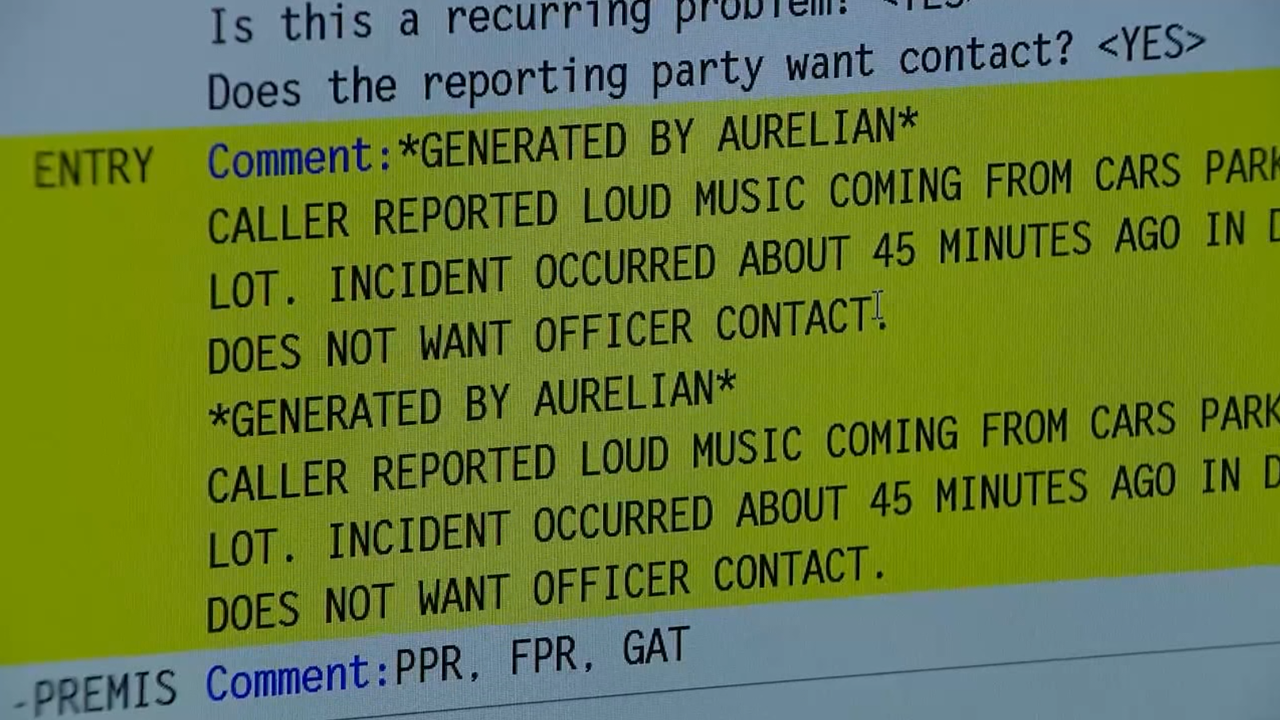
Winter Garden is not the first Florida law enforcement agency to adopt this advanced AI technology. Volusia County successfully introduced a similar AI-powered system last year, demonstrating its practical application in public services. The system is meticulously designed to ask callers all the typical questions dispatchers would normally ask to gather comprehensive information about nonemergency incidents. Brittany Yisrael, a communications shift commander in Volusia County, confirmed this, stating, "Every possible question that we would ask, AVA is asking that caller." During a demonstration, the AI system, AVA, was observed asking a caller for the address of a reported noise complaint, showcasing its functionality.
Dispatchers can focus on emergencies
Winter Garden police emphasize that the integration of this AI technology will significantly help to free up their human dispatchers. This allows the dispatchers to concentrate more effectively on crucial emergency calls and maintain vital radio communications with officers actively in the field. Captain Mason elaborated that dispatchers often contend with managing several critical responsibilities simultaneously, including handling a constant flow of incoming telephone calls and coordinating essential radio traffic. The implementation of AVA is expected to provide much-needed added support, which could help ease this considerable workload and enable dispatchers to allocate more focused attention to situations that unequivocally demand an immediate and human response.
Callers can still reach a live dispatcher
A key feature of the new AI system is that residents who become frustrated with the automated voice system or simply prefer speaking with a live person will retain the option to do so. Captain Mason assured that AVA is specifically designed to recognize cues indicating a caller's dissatisfaction or difficulty interacting with the system, prompting it to transfer the call to a human dispatcher. Furthermore, he clarified that the system incorporates a predefined process for routing callers to a live dispatcher in scenarios where the AI technology may not be functioning correctly. The overarching goal, according to the police department, is to enhance the efficiency of handling nonemergency calls while simultaneously ensuring that human dispatchers can dedicate their primary focus to urgent situations that require their immediate and direct attention.