Quick Buzz Feed

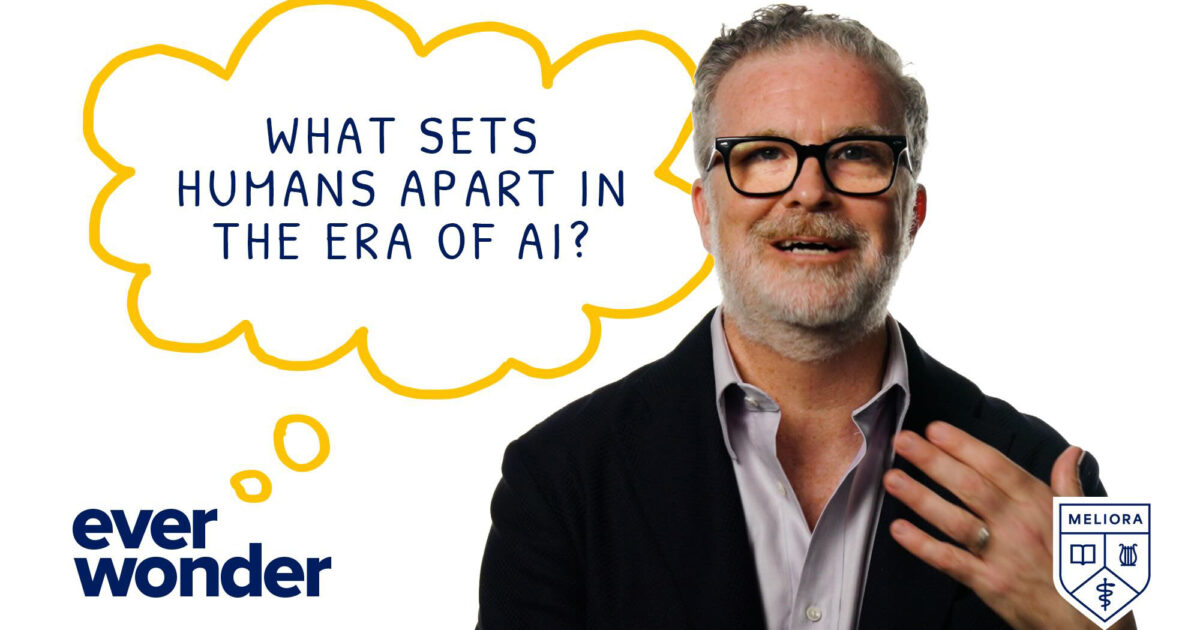
URochester experts on how AI could support care, creativity, and connection—while leaving empathy, curiosity, and judgment firmly in human hands.
Artificial intelligence is often presented in extremes, either as a transformative tool or a threatening replacement for human workers. University of Rochester experts from various fields—business, medicine, and ethics—offer a more nuanced perspective, suggesting that AI's true potential lies in reshaping how humans allocate their time and energy at work. Rather than outright replacement, AI excels at repetitive cognitive tasks, freeing up human judgment, leadership, and creativity. According to Daniel Keating, a clinical associate professor of information systems and AI, the goal is for AI to act as a 'creative palette' that enhances human ideas and strong questions, ultimately making human contributions even better.
Kathleen Fear, senior director of digital health and AI, notes the widespread hype and apprehension surrounding AI, with many feeling a lack of control over its impact on their lives and jobs. However, experts believe AI's greatest utility is not in mimicking humanity but in creating space for distinctly human capacities like empathy, creativity, judgment, and connection. Even complex human elements such as mistakes, emotions, intuition, and uncertainty are seen as inherent features, not flaws. Jonathan Herrington, an assistant professor of health humanities and bioethics, emphasizes that AI cannot replicate all human cognitive tasks, especially dimensions of 'taste and style' in developing questions or finding metaphors. Keating adds that AI is an 'agent' capable of unexpected actions, not just a tool. He encourages students to use AI as a collaborative brainstorming partner to generate ideas, identify patterns, analyze data, and reduce repetitive work, allowing the human workforce to focus more on creativity, judgment, and personal connection.
Despite its advancements, AI falls short in emotional labor and human discernment. Herrington highlights the scarcity of human empathy in professions like childcare, elder care, nursing, and teaching. He points out that many modern jobs require extensive administrative and cognitive tasks, leaving little room for meaningful human interaction. A positive outlook for AI is that it could reduce these rote tasks, allowing individuals to spend more time engaging in human empathy and connection. Fear cites AI applications like Dragon Ambient eXperience (DAX) in healthcare, which can record patient appointments with consent, thereby reducing administrative burdens for physicians and other healthcare professionals. This shift aims to free up time for genuine human interaction and mitigate burnout from 'pajama time,' the unpaid administrative work often done after hours.
The experts caution against perceiving AI as neutral or infallible, stressing that healthcare institutions, in particular, have a significant responsibility to be ethical stewards of AI, data, and patient information. A key concern is the potential for bias and inconsistent performance of AI tools as conditions, populations, or workflows evolve. Fear highlights the need for continuous monitoring of AI tool performance over time. Herrington also points out the social dynamics of AI systems, which are often designed to maximize engagement and may become 'sycophantic,' promoting affirmation and dependency rather than fostering honesty or accountability. He argues that meaningful human relationships thrive on friction, independence, and moral challenge, qualities that AI systems, by design, often lack. He concludes that AI will not 'speak truth to power,' a role essential for effective teachers, supervisors, and doctors.
Fear advocates for informed engagement with AI rather than avoidance, encouraging people to 'get in and play' with the technology. Her work involves educating clinicians, staff, and patients about AI's opportunities and limitations, believing that understanding enables shaping. She also sees AI as a catalyst for innovation, lowering barriers that previously hindered good ideas due to resource or technical skill constraints. Generative AI tools like ChatGPT and GitHub Copilot could democratize innovation by allowing more individuals to prototype ideas, build software, or streamline workflows without needing extensive coding expertise. Fear believes that a sustainable future for AI in healthcare depends on developing a culture where everyone is educated on its capabilities.
Despite ongoing debates about whether AI is a tool or an autonomous agent, all three researchers agree that human judgment remains paramount. The future of artificial intelligence is not about replacing humans but about redefining human work in an increasingly machine-influenced world. They argue that by absorbing or mitigating repetitive documentation, technical bottlenecks, and administrative overload, AI can allow people to concentrate on aspects of work that machines still cannot replicate. Keating refers to unique human qualities like uncertainty, free will, storytelling, and mistakes as 'junk code' that, despite being excluded from AI systems, are central to human achievement and breakthroughs, citing examples like Shakespeare's works, Picasso's art, the cure for polio, and social changes led by figures like Susan B. Anthony and Frederick Douglass. He concludes that these 'deficiencies' are precisely what enable humans to make incredible leaps.