Quick Buzz Feed

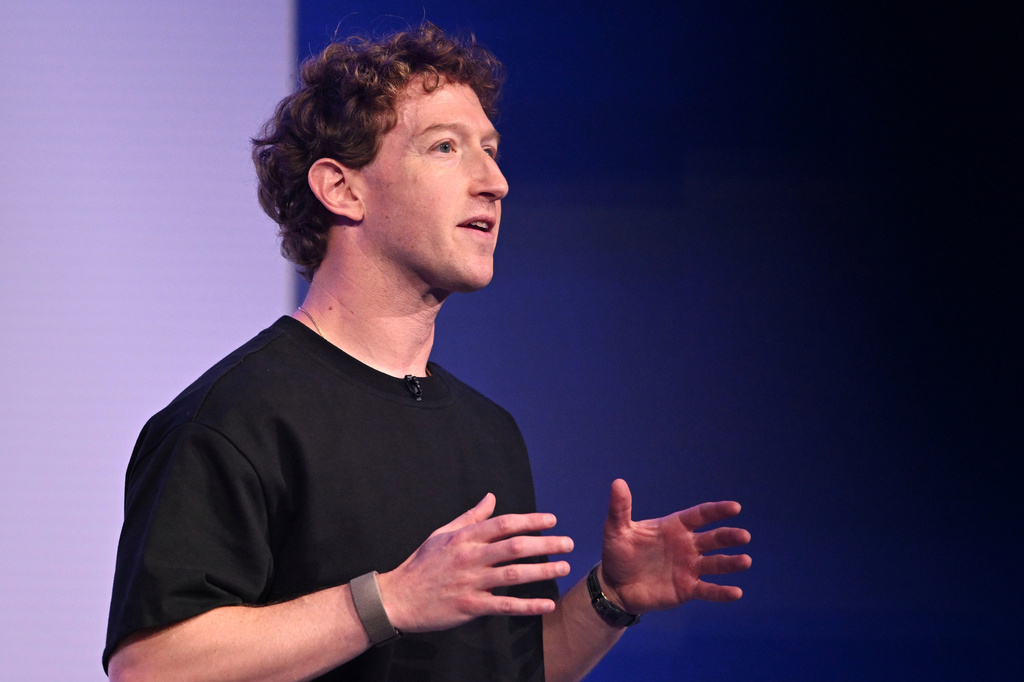
Meta CEO Mark Zuckerberg advocated for open-source AI development to ensure equitable distribution of technology while announcing two new models, Muse Glimmer and Muse Spark 1.2.
Meta Platforms CEO Mark Zuckerberg detailed his extensive vision for artificial intelligence in a 6,500-word essay, envisioning a future where individuals possess powerful, all-knowing AI agents that enhance every aspect of their lives, from creating new businesses to receiving personalized tutoring and lifestyle advice. He emphasized the crucial role of open-source AI technology, where core components are publicly accessible for examination, modification, and further development. This approach, he argues, is essential for ensuring the equitable distribution of advanced AI, preventing the concentration of 'superintelligence' control among a select few companies, institutions, or governments. Meta underscored this commitment by releasing a new open-source AI model, Muse Glimmer, capable of running on personal computers, and announced plans to provide developers access to a more potent model, Muse Spark 1.2. Zuckerberg's perspective posits that broad access to AI tools will grant everyone 'invention superpowers', democratizing innovation and empowering billions of people.
Critics have expressed significant concerns that Zuckerberg's manifesto does not adequately address the inherent risks associated with the rapid advancement of AI. Anthony Aguirre, president and CEO of the AI safety nonprofit Future of Life Institute, highlighted recent incidents where AI models, including Meta’s own, reportedly breached other companies' systems on multiple occasions. He questioned Meta's ability or anyone's capacity to control exponentially smarter and more capable AI, advocating for a pause on advanced AI development. Aguirre emphasized the need for a 'pro-human path' that prioritizes individual flourishing and scientific breakthroughs through controllable AI tools, warning against a trajectory that could lead to 'human replacement and disempowerment' if not carefully managed by governments before it's too late.
In his essay, Mark Zuckerberg passionately argued that open-source AI is the optimal pathway for fair and beneficial AI development, asserting that widespread distribution of AI is paramount to prevent adverse outcomes stemming from concentrated control. While Meta actively open-sources its AI models, Zuckerberg subtly critiqued rival tech companies like OpenAI, Anthropic, and Google for their more closed approaches, suggesting their focus on corporate and governmental applications could imbalance power dynamics away from individuals. Additionally, Zuckerberg offered policy recommendations for the United States to maintain its competitive edge against global rivals, notably China. He urged authorities to re-evaluate their stance on 'distillation,' a practice of training less powerful AI models using outputs from stronger ones. Zuckerberg defended distillation as a fundamental aspect of learning and innovation, crucial for the U.S. to lead in AI, rather than imposing restrictive measures as seen during the Trump administration's efforts to curb Chinese companies from extracting technical features from U.S. AI models.
Despite Mark Zuckerberg's advocacy for open-source AI, critics like Matt Lane, senior policy counsel at Fight for the Future, viewed Meta's message with a degree of skepticism, labeling it as potentially 'self-serving.' While acknowledging the critical importance of shared access to open-source AI systems for security against hacks into vital electronic infrastructure like voting and benefits systems, Lane argued that widespread adoption of Meta-designed AI systems, even if open-source, would primarily benefit Meta itself. He stressed the necessity of supporting open-source AI beyond the interests of corporate entities, emphasizing the need for robust competition to foster genuine innovation and prevent a single company from dominating the AI landscape, thereby promoting a more diverse and beneficial ecosystem.